
Last updated November 25, 2026
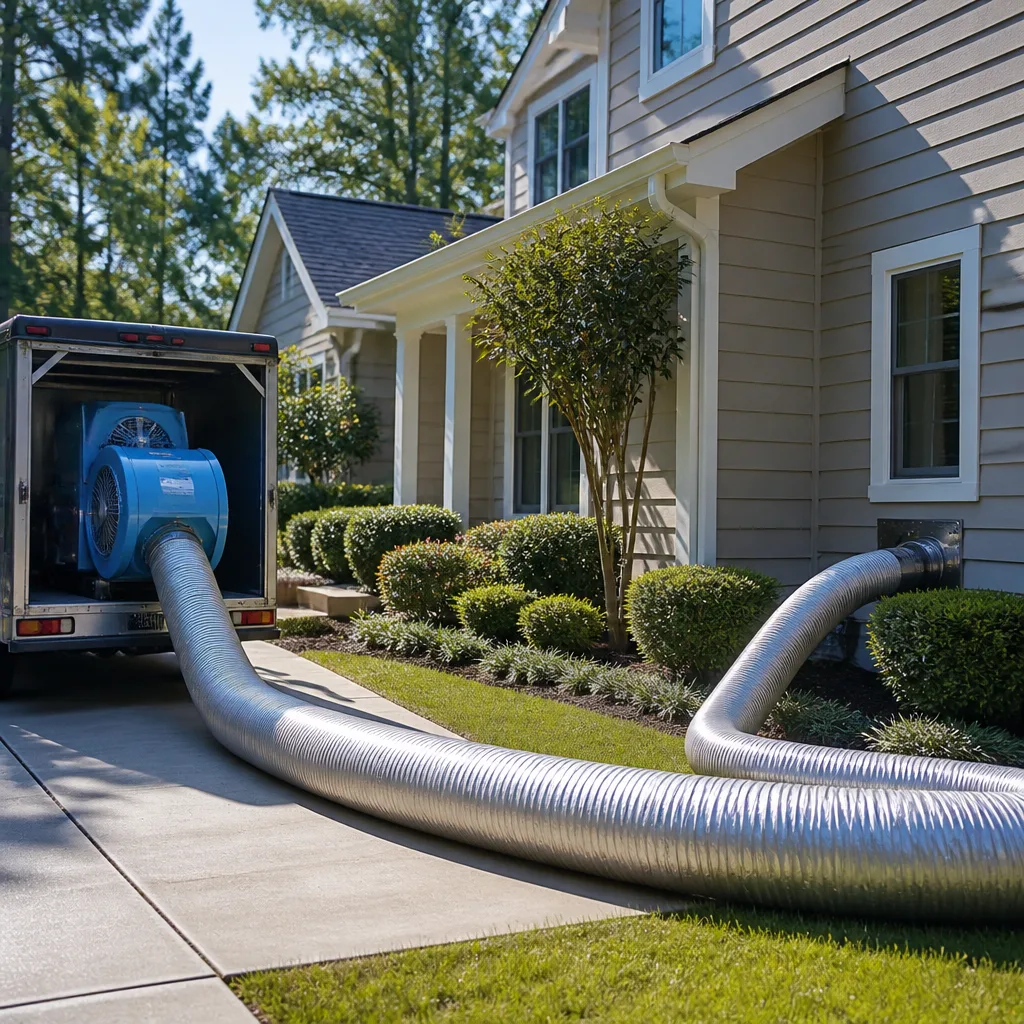 Whole-home duct cleaning
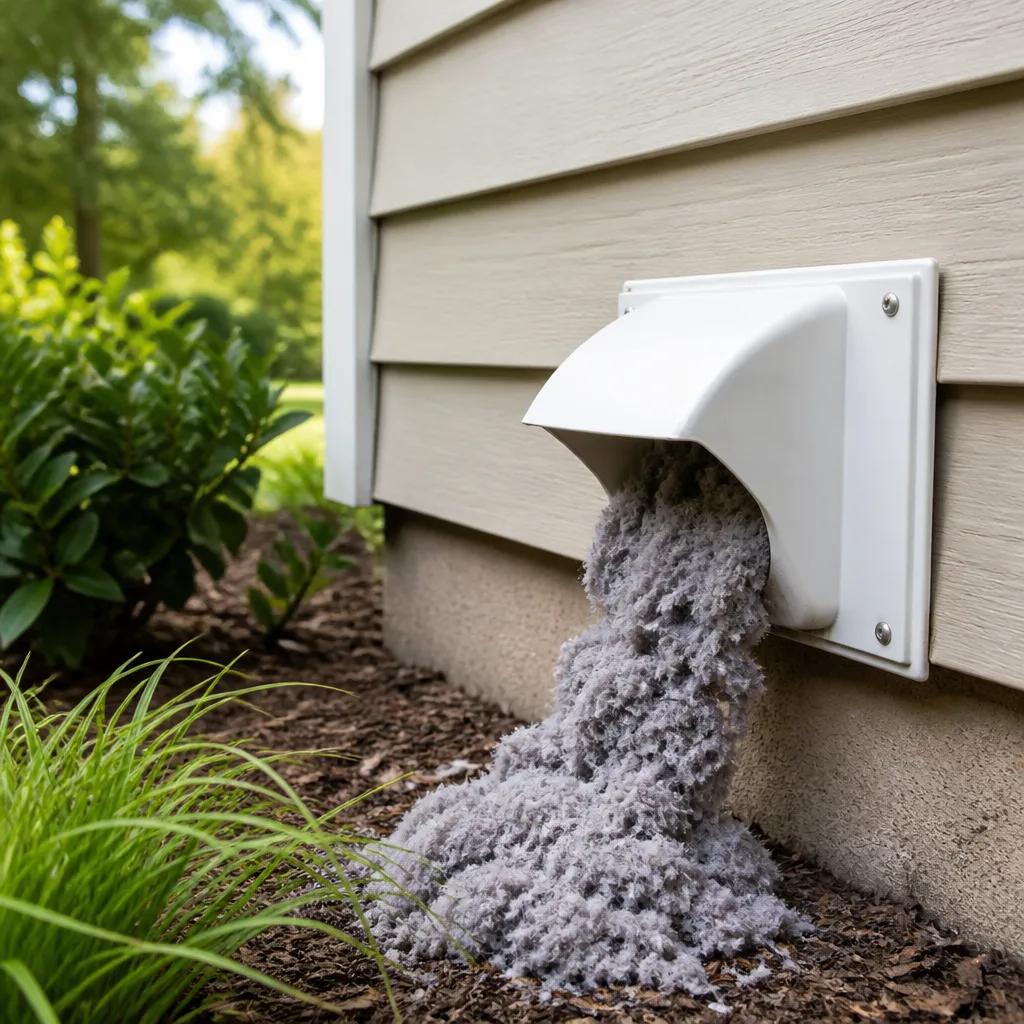 Dryer vent cleaning
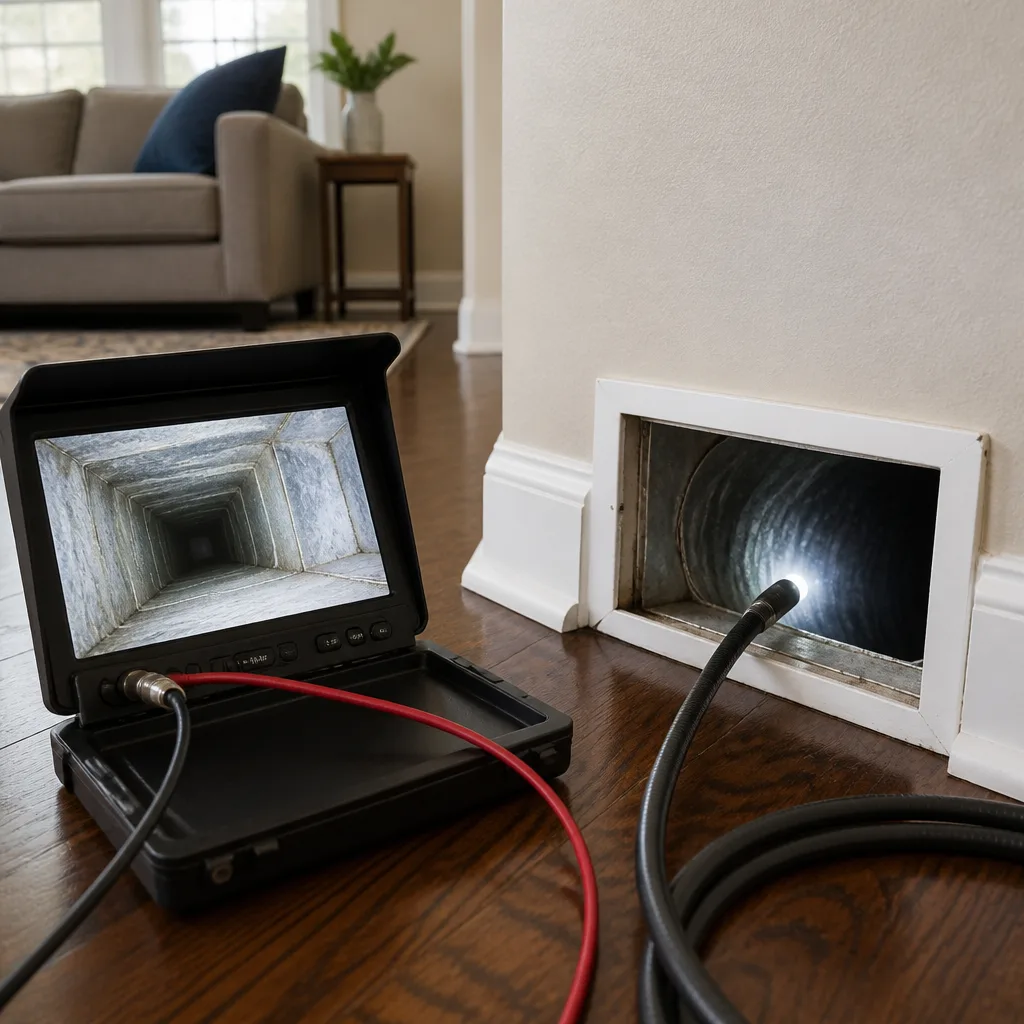 Camera inspection
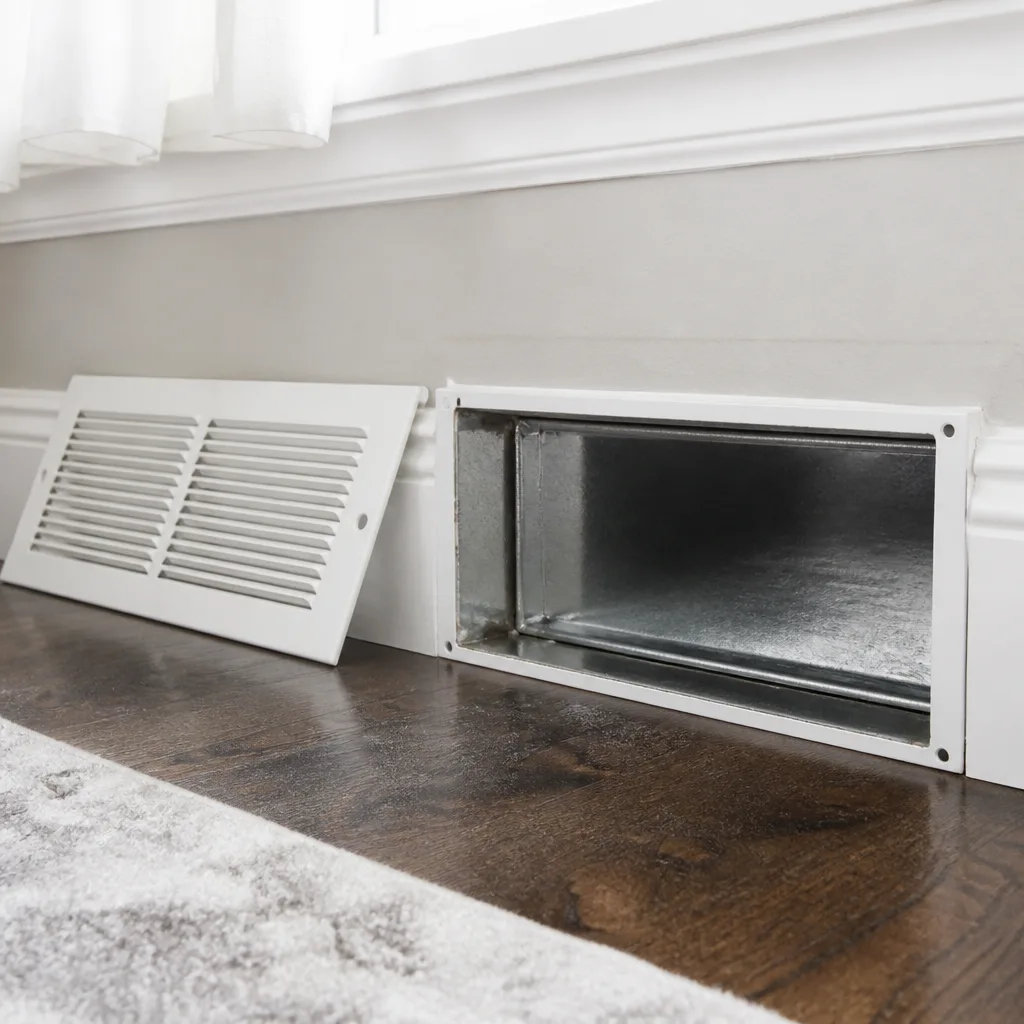 Sanitizing & deodorizing
Whole-system duct and dryer vent check with before-and-after photos - you see exactly what came out of your vents
That "$99 whole-house special" is a bait ad - the real number appears once they are in your hallway, or the "clean" is a shop-vac at the register. We photograph the inside of your ducts before and after instead.
Air Duct Cleaning Troubleshooting in North Buffalo: Common Problems and How to Fix Them
If one room in your house is always 8-10°F off from the thermostat setting, your ducts are almost certainly the reason, not your furnace. That’s the part most homeowners get wrong. When a bedroom stays cold through a Buffalo winter or the upstairs never quite catches up in July, the instinct is to blame the equipment in the basement. In our experience, the equipment is usually doing its job. What fails is the pathway delivering the air, and a duct system that has lost its seals, sagged its liner or filled with debris will quietly undo everything the furnace or air handler produces. This guide teaches you how to read those symptoms in a North Buffalo home, tell a dirty duct problem from a damaged one, and know exactly what to ask for before you call anyone.
Quick Answer
Most duct problems in North Buffalo homes get misdiagnosed because cleaning and repair are treated as the same job. A dirty duct needs professional extraction and mechanical agitation of the duct walls; a damaged duct with a breached liner, disconnected joint or collapsed run needs repair and sealing, and cleaning alone will not fix it. Your system is already telling you which one you have through temperature swings, returning smells and specific sounds. Learning to read those symptoms saves you from paying twice.
Styles & brands we work with
- Whole-home duct cleaning
- Dryer vent cleaning
- Camera inspection
- Sanitizing & deodorizing
Table of Contents
- How to Tell a Dirty Duct Problem From a Damaged One
- What Uneven Room Temperatures Really Mean
- Why Musty Smells Come Back Weeks After a Cleaning
- The Sounds Your Ducts Make and What They Map To
- When You Need a Scope Inspection First
- Why Equipment Choice Decides the Outcome
- Sealing and Repair: Finishing What Cleaning Starts
- The Dryer Vent Problem Hiding in Plain Sight
How to Tell a Dirty Duct Problem From a Damaged One
This is the single most useful distinction in duct troubleshooting, and it’s the one most homeowners never hear. Dirt is a volume problem. Damage is a structural problem. They show up with different symptoms and they need different fixes.
A dirty duct system is still intact, just lined with years of accumulated dust, dander and debris. Airflow drops gradually, rooms get dustier, and the supply registers start throwing visible dust into the air when the blower kicks on. A damaged system has lost its integrity somewhere: a seal has pulled apart at a joint, a flexible run has kinked or torn, or the interior liner has begun to fail. The tell is usually uneven performance. Some rooms get plenty of air and others get almost none, or a room gets air that’s the wrong temperature for how far it sits from the equipment.
Use this quick breakdown before you pick up the phone:
- Even dust everywhere, softer airflow overall – leans toward a cleaning problem.
- One or two rooms starved for air while others are fine – leans toward damage or a blockage in that branch.
- A smell that returns after a cleaning – leans toward a liner breach.
- A whistling or roaring register – leans toward a restriction or a seal that’s leaking.
In North Buffalo, the housing stock makes this distinction matter more than usual. The neighborhood has a lot of older homes with long, branching duct runs, and many of those systems have been modified over the decades as rooms were added, furnaces were replaced, or an addition was tied into the original trunk. A single disconnected joint in a back bedroom branch can leave a room permanently cold while the furnace, which is fine, keeps running longer than it should. That’s a duct failure wearing a heating problem’s clothing, and cleaning alone won’t clear it.
What Uneven Room Temperatures Really Mean
A room that’s consistently 8-10°F off from the thermostat is not a sign of a weak furnace. It’s a sign that the duct branch feeding that room isn’t delivering its share of conditioned air, and there are three common reasons for that.
The first is static pressure imbalance. The blower sends air into a trunk, and each branch takes its share. If a branch is undersized, overly long, or has too many turns, the air takes the path of least resistance and dumps into the nearest rooms instead. The far room starves. The second is a restriction: a buildup of debris, a crushed section, or an object that made its way into the duct during a renovation. The third is leakage, where conditioned air escapes through disconnected joints or gaps before it ever reaches the register.
Here’s what we’ve learned to check first when a North Buffalo homeowner describes a room that never warms properly:
- Is the register actually open and unobstructed by furniture, rugs or a closed damper?
- Is the room the farthest point on its branch from the equipment?
- Does the airflow feel weak compared to a nearby register, or is it strong but the wrong temperature?
- Does the problem show up more in the coldest part of winter, or year-round?
Strong airflow at the wrong temperature usually points to a leak near the equipment, where cold basement air is being pulled into the supply stream. Weak airflow points to a restriction or blockage further down the branch. When the symptom is a room that’s always cold regardless of season, a full inspection of the branch and its connections is the honest first move. Our air duct cleaning service starts with exactly that walkthrough, because a diagnosis before a machine is how you avoid paying to clean a duct that really needed sealing.
Why Musty Smells Come Back Weeks After a Cleaning
If a musty smell disappears for two or three weeks after a cleaning and then creeps back, the cleaning didn’t fail. Something is reintroducing moisture or stale air into the system, and the most common culprit is a damaged interior liner or a condensate issue upstream of it.
Fiberglass duct liner, common in older North Buffalo homes, has an outer skin that keeps its insulation dry. When that skin is torn by rodents, torn during a renovation, or simply aged, moisture can reach the fiberglass and the system stays damp long after a cleaning passes through. Fiberglass that stays wet becomes a growth surface, and no amount of mechanical agitation will keep it dry. The smell returns because the moisture source is still there.
The other pattern worth ruling out is a return-side leak. If a return duct has pulled apart in a basement or a crawlspace, the system draws in air from a damp area on every cycle and distributes it through the house. Cleaning the ducts only cleans the dusty result; the draw of musty air continues.
Early fall in North Buffalo is when this pattern tends to reveal itself. The first stretch of cool, damp weather pushes relative humidity up in basements and unconditioned spaces, the system runs less, and any moisture sitting against a breached liner has time to bloom. If a homeowner calls us about a smell that returned in October after a spring cleaning, we treat the liner and the return side as the primary suspects, and we recommend a proper inspection before another cleaning pass. A second cleaning without a diagnosis is money spent on the wrong problem.
The Sounds Your Ducts Make and What They Map To
Sounds are free diagnostics. A duct system that rattles, whistles or thumps is telling you its defect out loud, and matching the sound to the likely cause narrows the work quickly.
- Rattling or buzzing at a register or along a wall – usually a loose damper, a vibrating sheet metal seam, or a supply boot that has worked loose from the floor or wall. Often fixed with resealing, not major repair.
- Whistling – a restriction. Air squeezing through an undersized opening, a partially closed damper, or a duct section that has been crushed. If it started after a renovation, suspect something pushed into the run.
- Thumping or booming each time the blower starts – oversized ducts, a flex run that’s flexing under pressure change, or the sound of a system straining against a ductwork that’s too restrictive overall.
- Rushing or roaring noise at one register only – a leaky joint upstream pulling air, or a branch that’s carrying more than its share because a nearby branch is blocked.
- Soft tapping or fluttering from inside a wall – a damper flap oscillating, or a liner that has come loose and is vibrating in the airstream.
In our experience, whistling is the sound homeowners wait longest on, and it’s the one that most often points to a real blockage rather than a nuisance. Thumping that begins only when the blower starts is worth checking quickly because it can indicate pressure the system wasn’t designed for. None of these are problems to chase with a flashlight inside a wall cavity. The right move is a proper inspection that can see into the affected run. Regarding your central equipment, we leave electrical components and gas connections to a licensed HVAC technician; our scope is the air pathway itself.
When You Need a Scope Inspection First
You need a scope inspection before any cleaning when the symptom points at a specific short section of duct rather than the whole system. If one room is cold and its branch is the obvious suspect, cleaning the entire house first is backwards. Find the problem first, then decide what work it actually calls for.
Ask for a scope inspection in these situations:
- One room has been consistently starved of airflow for more than a season.
- A musty smell returned within weeks of a previous cleaning.
- A renovation involved the ductwork, and a sound or airflow change started afterward.
- The system was recently converted between heating and cooling and never performed the same way again.
- You hear a restriction sound (whistling) at one register and nowhere else.
A proper scope inspection places an articulating camera into the duct so the technician can see the liner, joints and connections. You should be shown the footage and told, in plain terms, what was found and where. That’s not a favor; it’s part of the job, and it’s how you avoid a cleaning invoice that doesn’t touch the damaged run. When homeowners ask us how to know whether they need an inspection, we tell them the same thing every time: if the problem has a location, it needs a look before a machine goes in.
We use professional-grade equipment for this work, and we think the diagnosis is where that equipment earns its keep. A reputable duct specialist near you will welcome being asked to show the footage. If a quote won’t include an inspection on a localized problem, that’s a telling answer.
Why Equipment Choice Decides the Outcome
Duct cleaning lives or dies on equipment, and it’s the one thing a homeowner can’t see when reviewing a quote. Two companies can hand you the same price and arrive with entirely different tools. Understanding the difference is worth ten minutes.
The rotary brush system, the industry standard you’ll hear called Rotobrush, physically agitates the duct walls with a spinning brush on a flexible line. That mechanical agitation is what knocks debris loose from the surface; suction alone cannot lift packed dust that’s been pressed into a duct over years. On the extraction side, negative-air machines such as Nikro units pull and hold a vacuum on the system while the brush runs, so dislodged material is captured instead of pushed into the living space. We also use Abatement Technologies air filtration equipment on site, the same category of tooling used in environmental remediation, which captures fine particulate released during the work.
This is the difference between professional-grade equipment and a consumer workaround. A shop vac and a hose will move some surface dust. It won’t agitate the duct walls, it won’t hold negative pressure on the system, and it won’t capture the fine particles it disturbs. For a North Buffalo home where the ducts may not have been touched in a decade, that distinction is the whole job.
When you’re comparing quotes, ask these questions:
- What rotary brush system is used, and does it run the full length of each branch?
- What negative-air equipment is placed on the system, and for how long?
- Is any capture or filtration equipment used in the work area?
- Will you show before-and-after photos of our ducts?
If a company can’t answer those, the price is rarely the real difference. For a closer look at how the full pathway from equipment through registers gets handled, the team’s approach is detailed on our Air Duct Cleaning North Buffalo page. Our technicians have up to 9 years of experience with this equipment, and they’ll walk you through what a given job will actually involve before anything starts.
Sealing and Repair: Finishing What Cleaning Starts
A cleaning job that leaves damaged seals and connections untouched is half a job. We seal what we clean, because a duct system that leaks loses a meaningful share of the air the equipment just paid to condition, and the improvement you noticed after the cleaning fades once dust finds the same gaps again.
Sealing work targets the leak points: seams between duct sections, disconnected joints, gaps at register boots, and the connections between flexible runs and larger trunks. A small leak at a joint in a basement can pull enough dust into the system to offset a cleaning within a couple of years, and a leak near a cold space can drag cold air into the supply stream and cool off the room it was supposed to warm.
When a repair is needed, the work usually falls into one of these buckets:
- Resealing existing ductwork – closing gaps at joints and seams with appropriate sealing materials rated for duct systems.
- Repairing collapsed or crushed sections – restoring airflow through a run that’s been pinched by a renovation or an object.
- Liner repair or replacement – addressing a breached interior liner so moisture stops finding the fiberglass.
- Branch reconnection – reattaching a run that has pulled out of the main trunk, common when branches were added or moved.
This is a natural extension of cleaning, not a separate business. If you’re already having the ducts cleaned, having a technician look at the joints while the system is open costs little and catches the leaks that would otherwise undo the work. Full details on the service live with our HVAC cleaning page, which covers the equipment-side scope as well. For a North Buffalo home where one room has never heated properly, this is often the step that finally fixes it.
The Dryer Vent Problem Hiding in Plain Sight
The dryer vent is the duct run most homeowners never think to check, and in a North Buffalo home with a laundry setup tucked into a basement or a narrow utility room, it’s often the most compromised run in the house. Lint buildup in a dryer vent is a well-documented fire risk, and a restricted vent also makes the dryer work harder and run longer.
Warning signs worth acting on:
- The dryer takes noticeably longer than it used to finish a load.
- Clothes feel damp at the end of a cycle, or the dryer gets very hot to the touch.
- The exterior vent flap doesn’t open fully or doesn’t open at all.
- Lint collects around the dryer door or behind the unit rather than in the trap.
- A visible lint accumulation is seen where the vent exits the home.
Many older North Buffalo homes have a long vent run with several elbows, routed to reach an exterior wall. Each bend and each extra foot of run collects lint. Cleaning the vent is a standalone piece of work, and we treat it that way: we run the appropriate equipment through the vent to clear the accumulated lint, check the exterior termination, and confirm the flap opens properly. We do not cut corners on a fire risk. Full details and what to expect are covered on our dryer vent cleaning page.
Common Mistakes to Avoid
- Assuming a cold room means a failing furnace. In most North Buffalo homes the equipment is fine and the duct branch is restricted or disconnected. Diagnose the duct before you replace the equipment.
- Booking a cleaning without an inspection on a localized problem. If one room is affected, cleaning the whole house first leaves the actual defect untouched. Ask for a scope inspection on the affected run.
- Treating a returning smell as proof the last cleaning was bad. A smell that returns within weeks usually means the moisture source or liner breach was never diagnosed. A second cleaning won’t resolve it.
- Letting a dryer vent wait indefinitely. Lint accumulates slowly and the fire risk grows with it. Have the vent inspected and cleaned, especially in older homes with long, elbow-heavy runs.
- Skipping sealing after cleaning. Leaky joints pull dust back in and let conditioned air escape. Have leakage checked while the system is open.
- Comparing quotes on price alone. A low number usually reflects equipment and scope differences, not a better deal. Ask what rotary brush system and negative-air equipment will be used.
- Ignoring a whistling register. Persistent whistling usually means a restriction, and a restriction that’s left in place can force the blower to work against pressure it wasn’t designed for.
See the difference
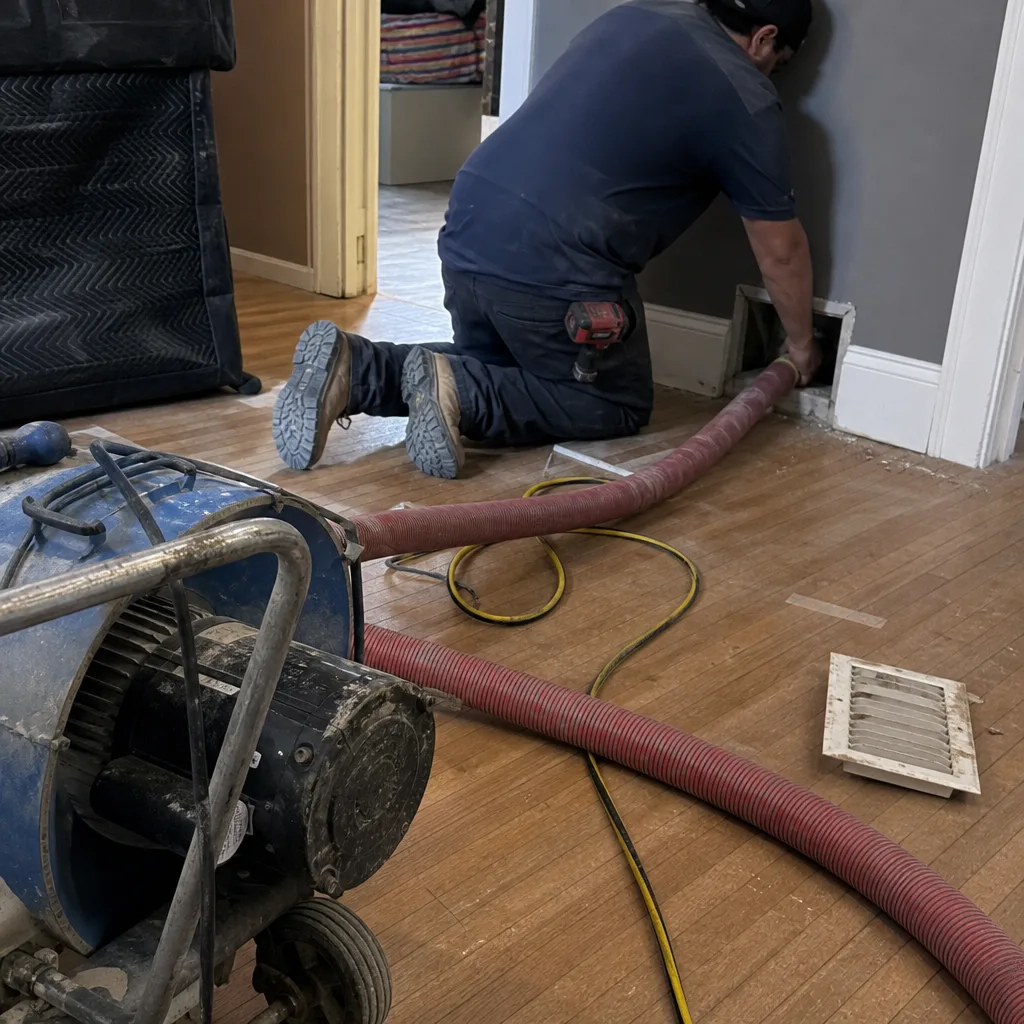 Before
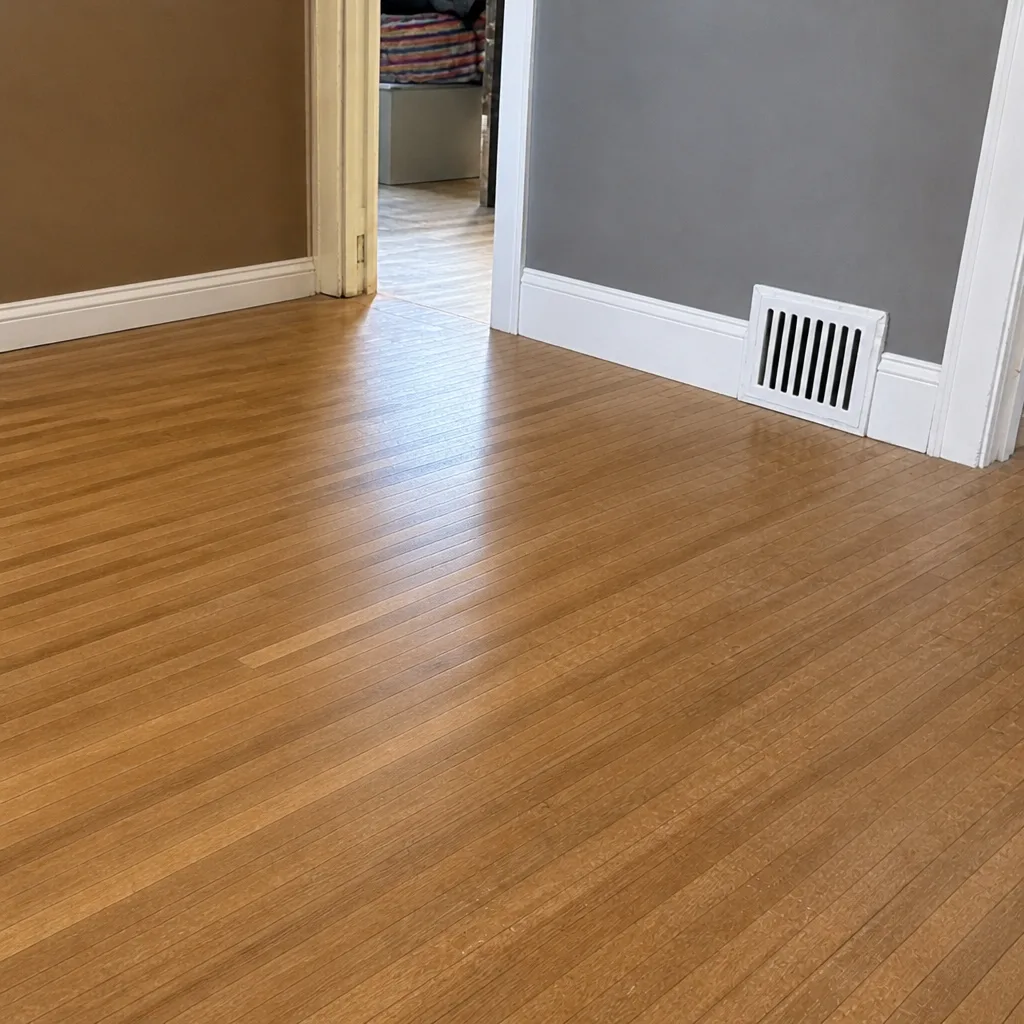 After
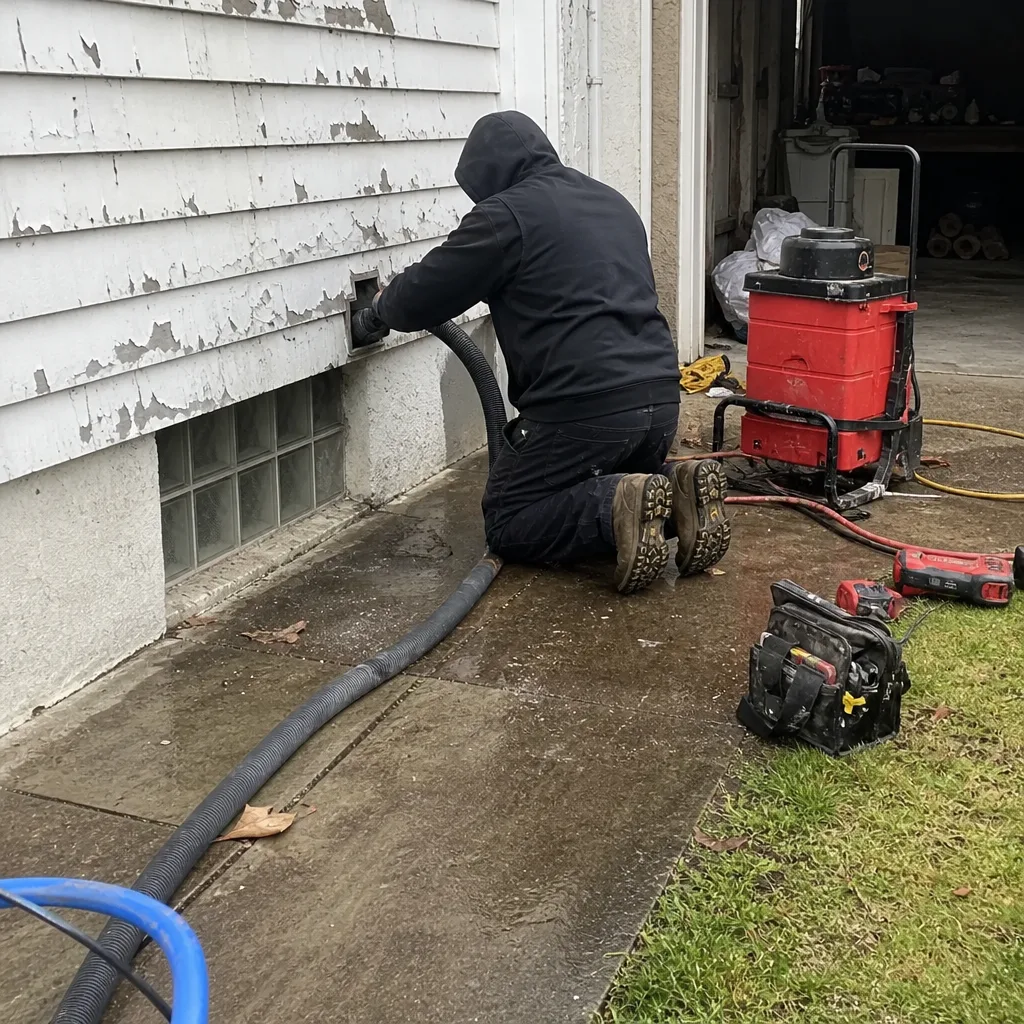 Before
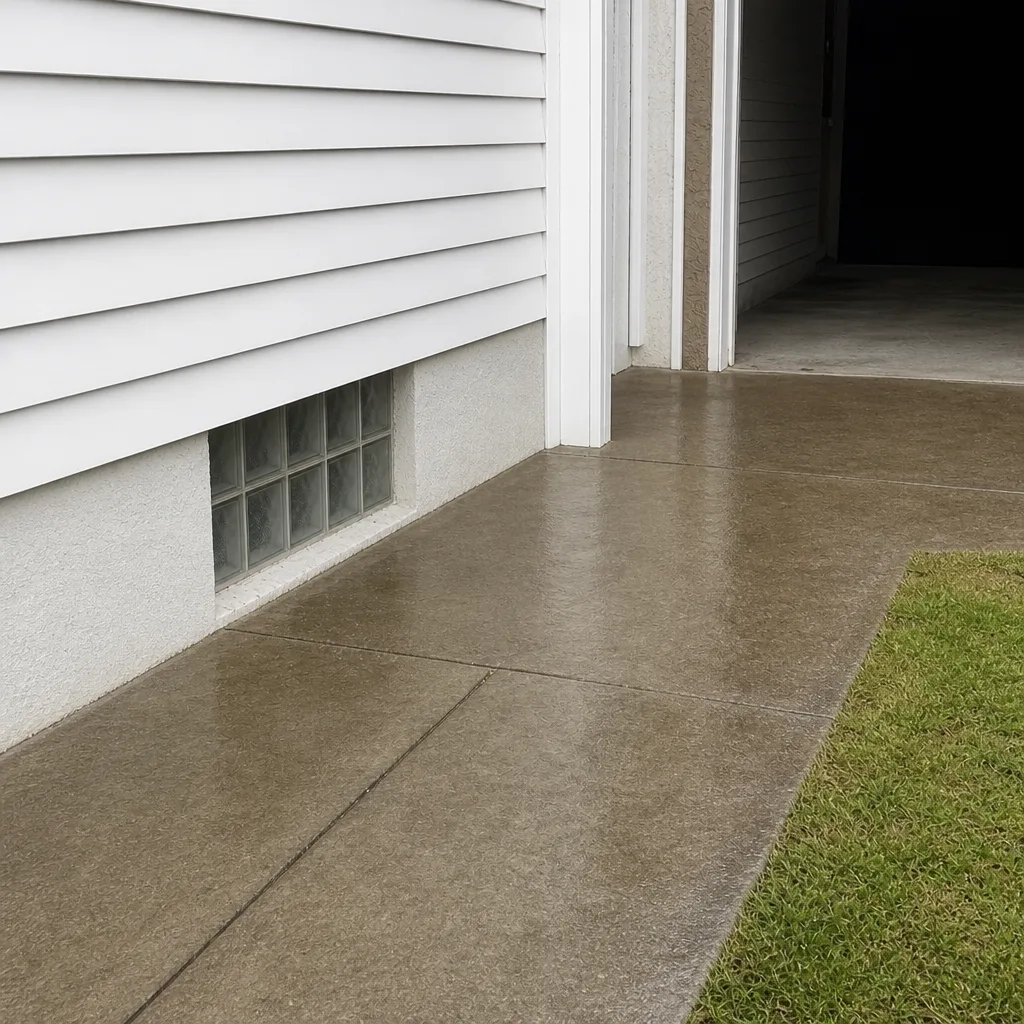 After
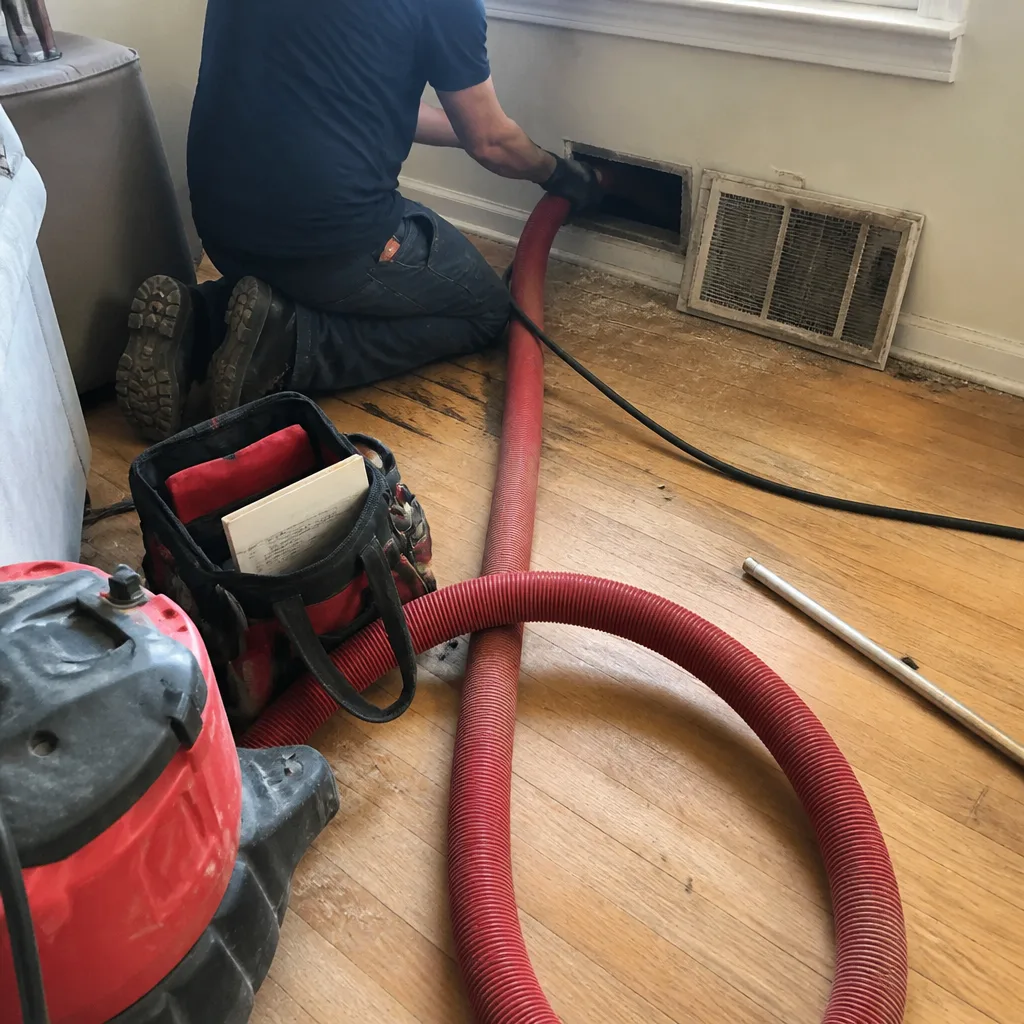 Before
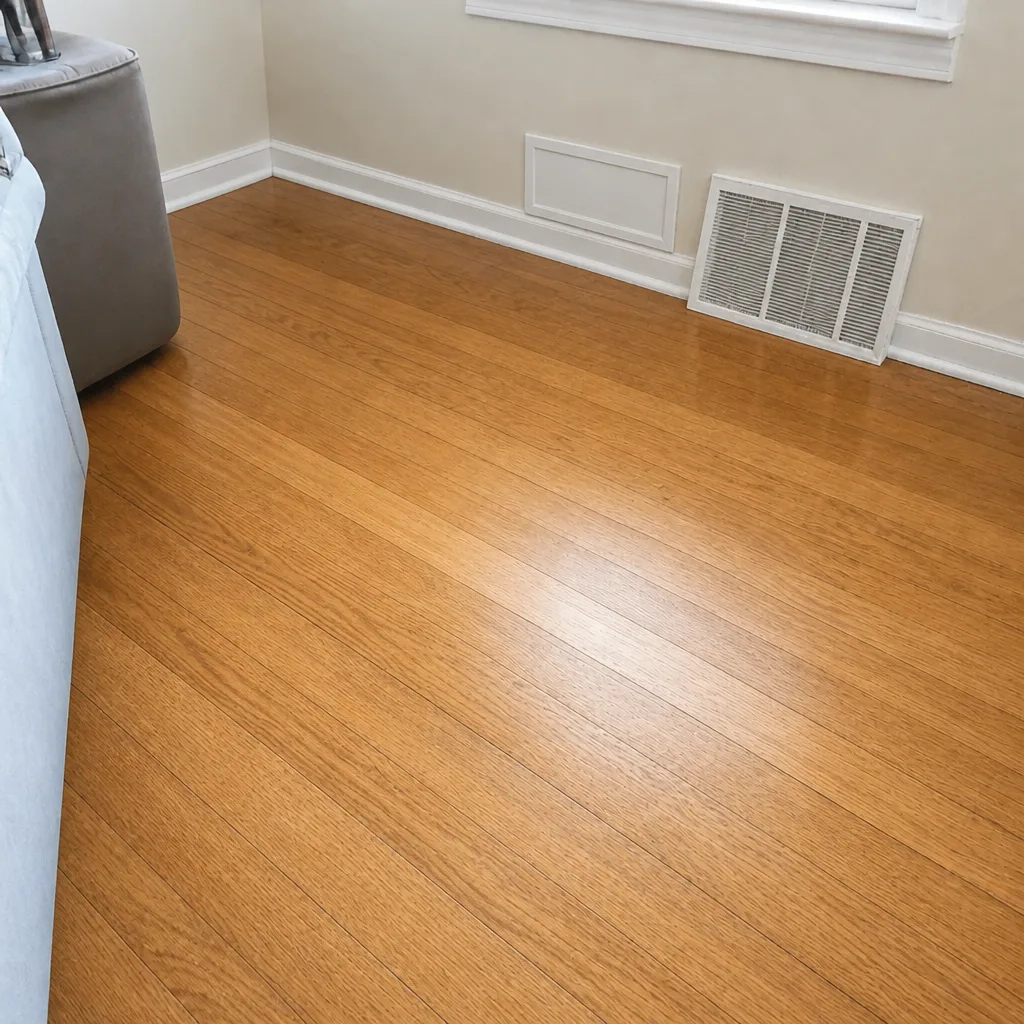 After
When to Call a Professional
Some duct problems are diagnosable from the inside of the house, but the fixes live inside walls and plenums where the work needs equipment, a method for keeping dust contained, and the ability to see into the run. Call a professional when a single room has been starved of airflow for a full season, when a smell returns within weeks of a cleaning, when you hear persistent whistling or thumping, when a renovation touched the ductwork, or when the dryer vent hasn’t been checked and the dryer is running long. Any of these points to a specific defect that deserves a look before a cleaning pass. Air Duct Cleaning North Buffalo offers free estimates in North Buffalo; call (877) 379-9769. We answer 24/7. Fast dispatch from 7am to 7pm, Sunday through Friday.
Frequently Asked Questions
Dirt shows up as gradual, even airflow loss and dust at nearly every register. Damage shows up as localized symptoms: one room starved of air, a smell that returns after cleaning, a whistling register, or a supply that’s the wrong temperature for its distance from the equipment. If the symptom has a specific location, it’s more likely a defect. Call (877) 379-9769 for an exact quote; estimates are free.
A returning musty smell usually points to a breached duct liner or a return-side leak that lets damp air into the system from a basement or crawlspace. Cleaning clears the surface dust, but the moisture source stays. North Buffalo’s damp fall weather tends to expose it. A scope inspection finds the source; a second cleaning won’t. Call (877) 379-9769 to arrange one.
It’s usually a duct problem, not a furnace problem. A single cold room typically means that branch is restricted, disconnected, or leaking. In older North Buffalo homes with long branch runs, a disconnected joint on a back bedroom run is a very common find. A duct specialist can confirm which defect it is. Call (877) 379-9769 for a free estimate.
A whistling register usually means a restriction: an undersized opening, a partially closed damper, or a crushed duct section feeding that register. It’s a pressure signal, not just a nuisance. If the whistle started after a renovation, suspect an object pushed into the run. An inspection can confirm it. Call (877) 379-9769 for a free estimate.
There’s no fixed schedule that suits every home. A house in a high-traffic, pet-holding household or one recovering from a renovation may need attention sooner than a quiet home with newer ductwork. Instead of a calendar, watch the symptoms: even dust at every register, gradual airflow loss, or a persistent smell. When you see them, book an inspection rather than a cleaning. Call (877) 379-9769 for an exact quote.
A proper job uses a rotary brush system to agitate the duct walls and negative-air equipment to capture what’s dislodged, plus filtration equipment on site to contain fine particulate. It’s not a shop vac pass. Sealing and repair are assessed alongside cleaning, so a leak doesn’t undo the work. The team uses Rotobrush, Nikro and Abatement Technologies equipment across each job. Call (877) 379-9769 for a free estimate.
The Bottom Line
Most duct problems in North Buffalo homes get misdiagnosed because the quiet assumption is that the furnace is at fault. Read the symptoms instead: even airflow loss points to dirt, one starved room points to damage, a smell that returns points to a liner breach, and a whistle points to a restriction. Those signals save you from a cleaning invoice that doesn’t touch the real problem. When the diagnosis is clear, professional cleaning with the right equipment and sealing to finish the job gives the strongest result. If some part of this describes your home, a walkthrough is the fastest way to know what’s actually happening inside your ducts. Call (877) 379-9769 for a free estimate. We answer 24/7. Fast dispatch from 7am to 7pm, Sunday through Friday. We also handle integrated whole-home air quality hardware, including Honeywell and Aprilaire products, so preventive fixes can happen alongside cleaning.
Written by the team at Air Duct Cleaning North Buffalo.