
Last updated November 25, 2026
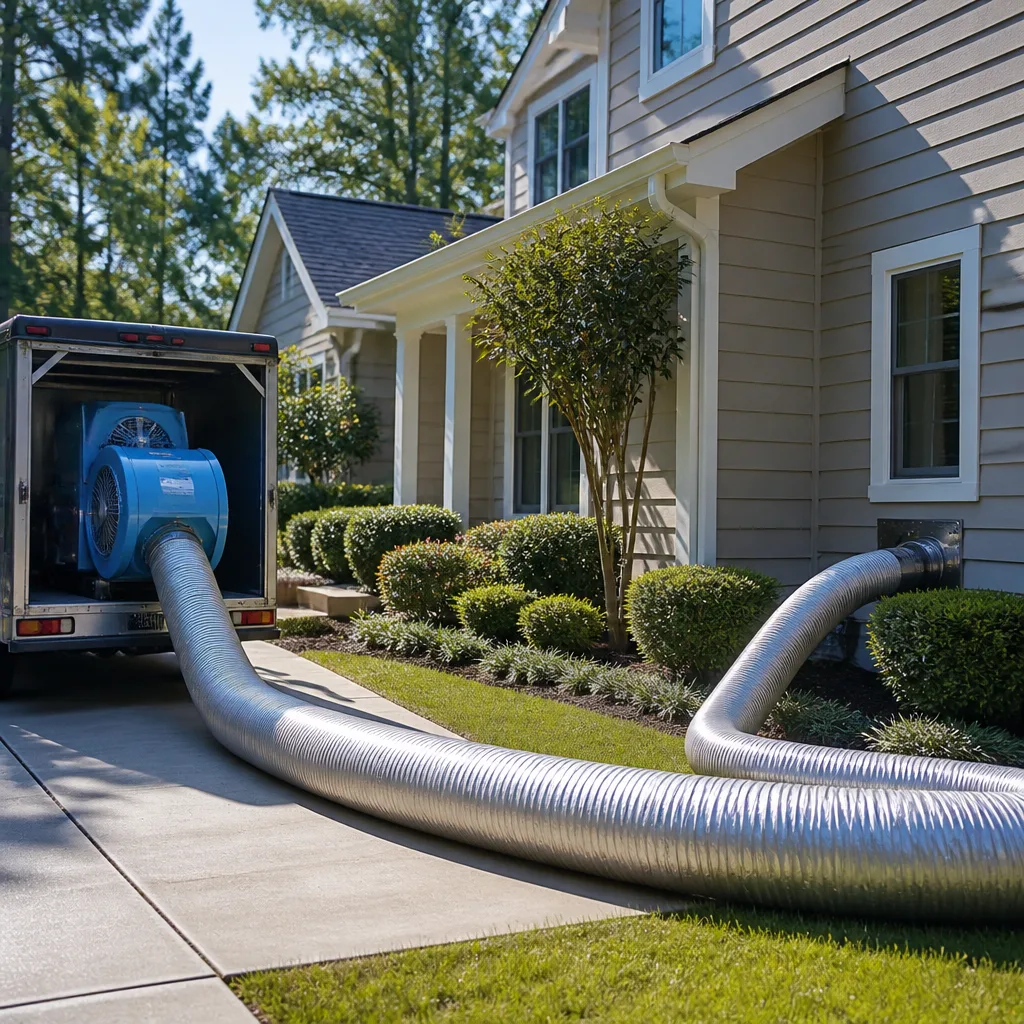 Whole-home duct cleaning
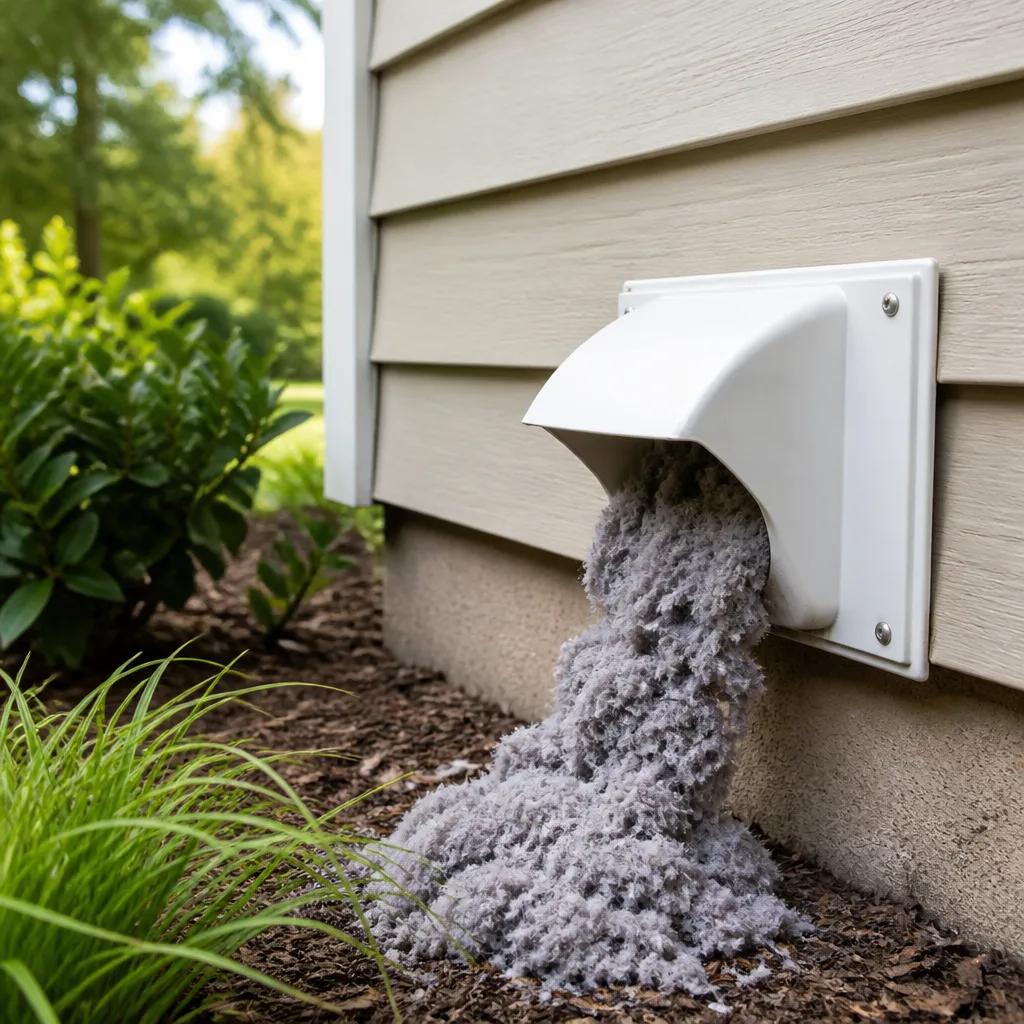 Dryer vent cleaning
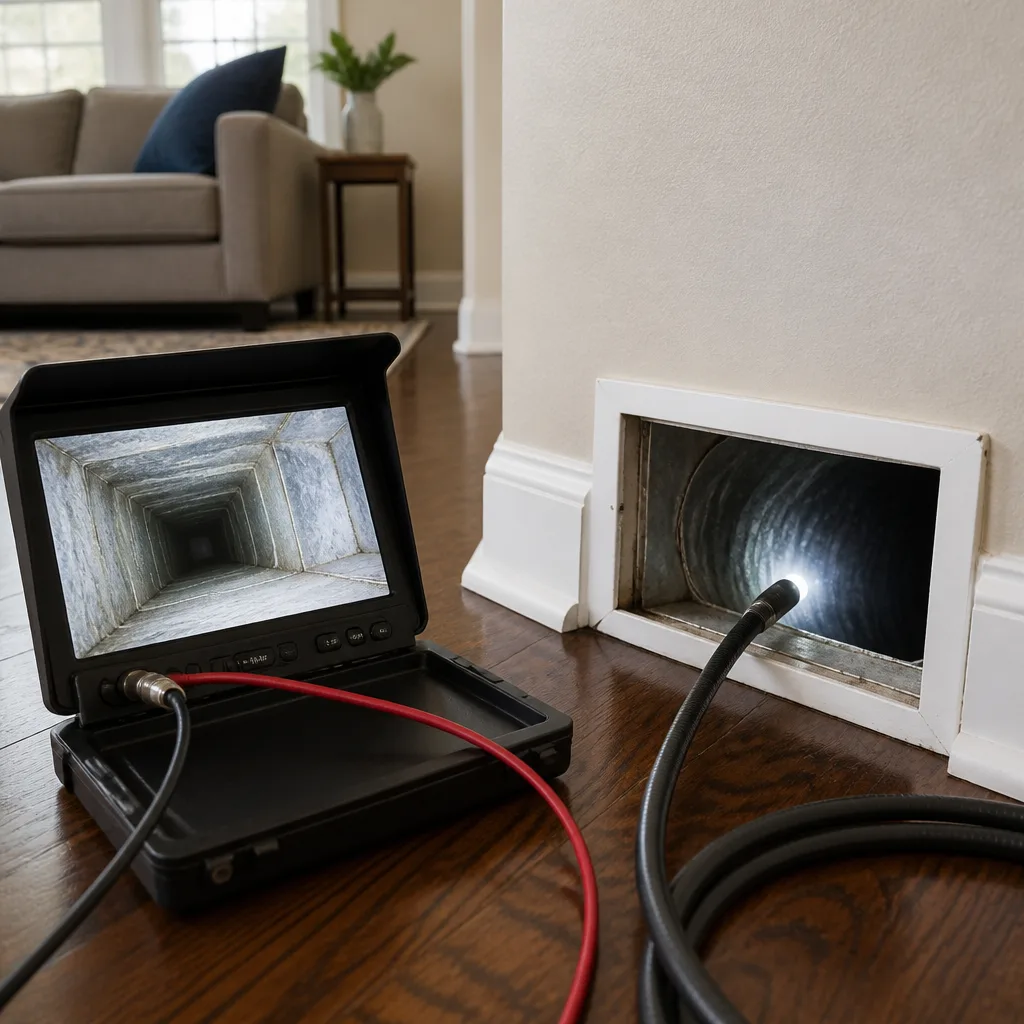 Camera inspection
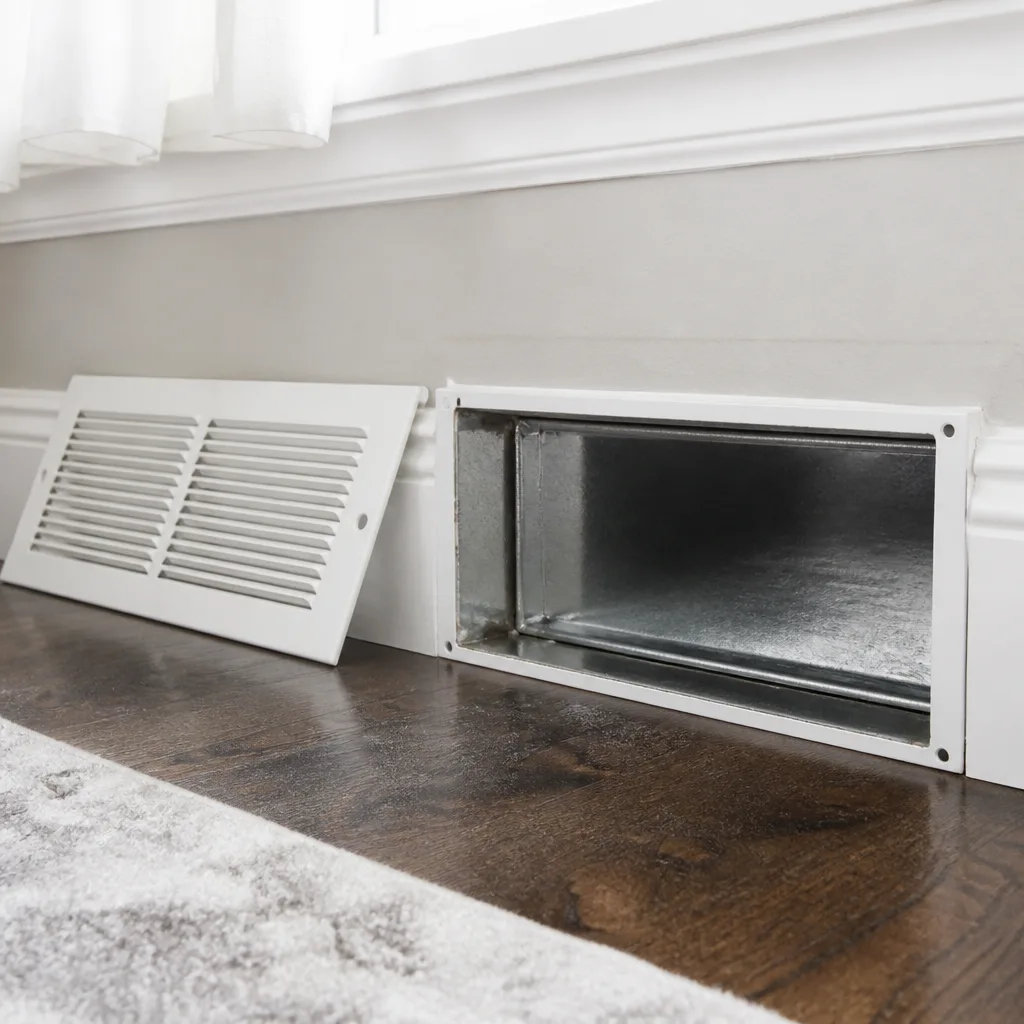 Sanitizing & deodorizing
Whole-system duct and dryer vent check with before-and-after photos - you see exactly what came out of your vents
That "$99 whole-house special" is a bait ad - the real number appears once they are in your hallway, or the "clean" is a shop-vac at the register. We photograph the inside of your ducts before and after instead.
The Complete Guide to Air Duct Cleaning in North Buffalo
A single duct cleaning visit in a 1950s North Buffalo colonial can uncover four separate problems that have nothing to do with dust. A loose trunk joint leaking conditioned air into a basement. A blower motor pulling harder than it should because the return side is starved. A dryer vent packed with lint behind the laundry wall. A filter slot that has been fighting a losing battle for months. Most homeowners book a cleaning expecting cleaner air and never learn the rest. This guide is about the whole picture: what’s actually inside the ductwork of a North Buffalo home, what a real cleaning uncovers, and how to tell the difference between a thorough job and a vacuum with a hose.
Quick Answer
Air duct cleaning in North Buffalo is the mechanical removal of dust, debris, and buildup from the entire air pathway of a home’s HVAC system, from the return grilles through the trunk lines to the supply registers. A thorough job uses rotary brush agitation and negative-air containment, not just suction, so dislodged material is captured rather than pushed back into the living space. In older North Buffalo housing stock, the process usually also reveals filter loading, blower strain, or duct seams that need sealing before a cleaning alone will hold.
Styles & brands we work with
- Whole-home duct cleaning
- Dryer vent cleaning
- Camera inspection
- Sanitizing & deodorizing
Table of Contents
- Why North Buffalo Homes Have Specific Duct Problems
- Source Removal vs. Contact Vacuum: What Equipment Class You’re Getting
- What Actually Happens During a Professional Cleaning
- What Should Be Documented Before, During, and After
- The Downstream Effects: Filters, Blower Motors, and Static Pressure
- When Cleaning Isn’t Enough: Repair and Sealing First
- The Dryer Vent Is Part of the Air Pathway Too
- How to Choose a Duct Cleaning Specialist in North Buffalo
Why North Buffalo Homes Have Specific Duct Problems
North Buffalo’s housing stock is its first diagnostic clue. A large share of homes across the North Buffalo neighborhoods – from Parkside and Central Park to the streets around Hertel Avenue and the blocks near Delaware Park – were built before 1970. That matters more than age alone. Pre-1970 construction typically means sheet metal ductwork assembled in short runs with taped or screwed seams, original register boots set into horsehair or early fiberglass insulation, and often a plaster interior that sheds fine dust into the return side whenever the house is opened up for renovation. The debris profile inside these systems is different from a 1990s suburban build with long seamless flex runs.
Three things follow from that. First, the debris is heavier and more stratified: construction grit and plaster fines settle at the bottom of horizontal runs while lighter dust coats the upper walls, so one pass of suction grabs the loose top layer and leaves the rest. Second, seams are the weak point. A duct that was taped decades ago has often lost adhesion, and a cleaning will move enough air to show you exactly where the leaks are. Third, the return side of an older North Buffalo system is often undersized relative to what the furnace is being asked to move, which shows up as blower strain and uneven room temperatures long before anyone thinks to look inside the ducts.
Western New York’s long heating season stacks on top of this. When a furnace runs hard for months, the dust that settles in the warm side of the ductwork gets baked onto the metal. That baked-on layer doesn’t come off with suction. It takes mechanical agitation – a rotary brush – to break the bond. This is the practical reason a North Buffalo home often needs a different cleaning approach than a milder-climate home of the same square footage.
Source Removal vs. Contact Vacuum: What Equipment Class You’re Getting
The single biggest quality difference between duct cleaning contractors is equipment class, and almost no homeowner gets told which one showed up. The two ends of the spectrum look similar at the door but behave very differently inside the duct.
Contact vacuum cleaning means a vacuum head reaches into the duct and pulls what it can reach. It removes loose dust from accessible surfaces. On a system that has only light surface dust, that may be enough. On a system with adhered buildup, packed return plenums, or debris in the far end of a long trunk run, a contact vacuum touches a fraction of the surface area and leaves the rest in place. Airflow returns, the problem comes back, and the homeowner concludes that cleaning doesn’t work.
Source removal cleaning means the debris is mechanically dislodged from the duct wall and then captured under negative pressure. Two pieces of equipment make it work:
- Rotary brush agitation. The Rotobrush system runs a spinning brush head through the duct, scrubbing the walls where dust bakes on, including the corners of rectangular trunk lines and the length of round branch runs that a vacuum head can’t scrub.
- Negative-air containment. A Nikro negative-air machine holds the ductwork under vacuum while the brush works, so the material the brush loosens is pulled toward the collection unit instead of drifting out of open registers into the room.
That second piece is the one homeowners underestimate. Cleaning dislodges a substantial amount of fine particulate. Without containment, some of it ends up on the furniture and in the air. Serious operations also bring an air filtration unit to the work area – Abatement Technologies equipment is in this category, the same class of tool used in environmental remediation – to handle what gets into the room air during the job. If a quote is dramatically lower than others you’ve received, the question to ask is which of these three pieces is actually arriving.
What Actually Happens During a Professional Cleaning
A full-system duct cleaning in North Buffalo follows a sequence. The order matters as much as the equipment, because you can’t clean what you haven’t isolated and you can’t verify what you haven’t photographed.
- Walkthrough and system survey. We identify every supply and return, note the furnace and air handler model, check the filter slot condition, and look for signs of disconnected runs or crushed flex in the basement or attic.
- Photograph the before condition. Interior shots of the trunk line, at least one long branch run, the return plenum, and the register boots. These are your baseline.
- Isolate the system and set up containment. Registers are removed, and the negative-air unit is connected so the ductwork is under vacuum before any agitation begins. The filtration unit runs to control room air.
- Brush every run. The rotary brush works from the trunk outward through each branch, with the vacuum pulling material back toward collection. Supply and return sides are both cleaned. This is the step that separates a real cleaning from a surface pass.
- Clean the components at the air handler. Blower wheel, blower housing, and the furnace’s accessible cabinet surfaces – see our HVAC cleaning page for why this matters as its own service.
- Reassemble and verify airflow. Registers go back, the filter is checked, and airflow at each register is confirmed. Any seam that opened up or joint that was found loose during cleaning is flagged.
- Photograph the after condition. The same interior locations, same angles, so the difference is verifiable rather than described.
For a typical North Buffalo single-family home, the cleaning itself runs a few hours depending on how many runs and how much adhered material is present. Larger homes with multiple zones or dense original ductwork take longer. Any contractor who tells you it’s a 45-minute job is telling you what class of cleaning you’re getting.
What Should Be Documented Before, During, and After
Here’s the honest test of whether the work was done: can the contractor show you the inside of your ducts before and after? Not the exterior of a register. Not a stock photo of a clean duct. Your actual ductwork, in your North Buffalo home, photographed at the same points.
Ask what will be documented. A professional operation should be able to provide:
- Before photos of at least one trunk line interior, one branch run, and the return plenum.
- Photos of any discovered problem – a disconnected run, crushed flex, a seam that separated, heavy buildup at a transition point.
- After photos at the same locations, so the result is comparable.
- A written record of what was cleaned, how many registers and returns, and what equipment was used.
- Any findings that need follow-up, in plain language, with a recommendation on whether repair, sealing, or a filter upgrade is the right next step.
This documentation standard is why our technicians photograph every job before and after. It’s also the reason we use Abatement Technologies filtration during service rather than opening registers into open room air: the documentation is only honest if the process behind it was controlled. If a company won’t tell you what they photograph or won’t share it, that’s your answer about how thorough the cleaning was.
The Downstream Effects: Filters, Blower Motors, and Static Pressure
Ductwork doesn’t fail in isolation. The health of the duct system shows up downstream at the air handler and at every register in the house. This is the part of the system diagnosis most homeowners never get explained.
Filter loading. Every bit of debris that stays in the ducts eventually gets picked up and carried to the filter. A loaded filter chokes airflow. A choked filter makes the blower work harder. The cycle repeats. In older North Buffalo homes where the filter slot is a 1-inch throwaway type, this happens fast. A media filter cabinet or a higher-capacity filter setup – Aprilaire makes this class of product – reduces the load and protects the blower. That’s the kind of equipment our team integrates when the diagnosis points that direction.
Blower motor strain. A blower moving air against a restriction draws more current to do the same work. On a permanent split capacitor (PSC) motor, that strain shows up as heat and eventually as a motor that fails early. On a modern electronically commutated motor (ECM), the blower compensates by spinning faster, which can mask a problem until it can’t. Either way, a clogged duct system shortens motor life. Cleaning the ducts and the blower wheel is how you relieve that load.
Static pressure imbalance. When the return side of a system is restricted while the supply side is open, static pressure goes negative in the return and positive in the supply, and the house gets uneven. Some rooms are hot. Some are cold. The blower is loud. The system runs longer cycles than it should. Cleaning the returns restores balance. Where the imbalance is caused by undersized return ductwork or leaks, cleaning alone won’t fix it, which brings us to the next point.
When Cleaning Isn’t Enough: Repair and Sealing First
Occasionally a cleaning reveals that cleaning alone is the wrong starting point. If the step-by-step above turns up any of the following, the honest diagnosis is that repair and sealing need to come first or at the same time.
- Disconnected or separated duct sections. A supply boot that’s pulled loose from a trunk line is delivering conditioned air into a basement or crawlspace instead of the room. Cleaning it thoroughly doesn’t fix that.
- Crushed or collapsed flex duct. Restricting airflow at a bend, usually because something was stacked on it or it was installed with too tight a radius.
- Failed seam tape throughout. Older North Buffalo ductwork often has seams that separated years ago. A cleaning will show exactly where. If a large share of the trunk is leaking, cleaning and sealing together is more practical than doing one and coming back for the other.
- Heavy biological growth. If a moisture or humidity problem has allowed growth inside the ducts, cleaning is not the whole answer. The moisture source has to be addressed, and the system may need sanitizing after cleaning. Our full-service approach treats repair, sealing, and sanitizing as part of the same air pathway – because dirty ducts, leaking ducts, and humid ducts are three faces of one problem.
- Undersized return ductwork. Where the system is starved for return air by design, cleaning restores what the system can do but won’t change the sizing.
If you suspect any of these before a cleaning is booked, say so when you call. We’d rather diagnose the system and recommend the right order of work than run a cleaning that won’t hold. See our main air duct cleaning service page for the scope this covers.
The Dryer Vent Is Part of the Air Pathway Too
Lint in a dryer vent is one of the most commonly cited contributors to house fires, and it’s a separate service from duct cleaning but part of the same overall air pathway of a home. In older North Buffalo houses, the laundry is often in a basement or a back-porch addition, and the dryer vent run to the exterior is longer, with more elbows, than in newer construction. That geometry traps lint faster than a short straight run, and it’s rarely checked.
A professional dryer vent cleaning clears the length of the vent, verifies the exterior termination is clear and working, and inspects for crushed or disconnected sections that allow lint to accumulate in a wall cavity. We treat this as a safety service, not an upsell. It’s part of the same “seal what we clean, verify what we open” approach we take inside the ducts – because a clogged dryer vent and a clogged duct system are both airflow problems, and both get worse quietly.
How to Choose a Duct Cleaning Specialist in North Buffalo
Several companies will quote a cleaning. Fewer will tell you what class of equipment is arriving, how the work is documented, or what they’ll do if the diagnosis changes. Ask these questions before you book, and treat vague answers as the answer.
- What equipment will be on-site? The answer should name rotary brush agitation and negative-air containment, not just “a truck with a vacuum.”
- Will you photograph before and after? Interior shots of the ducts, not just the register covers.
- What’s in scope? Registers and returns both? The blower wheel and cabinet? Dryer vent, if relevant?
- How is price set? One flat price per system, agreed before work starts, beats any per-vent or coupon-based number that can rise once the equipment is running. Ask for it in writing.
- What if you find a problem? A credible contractor photographs it, explains the options, and tells you whether cleaning, repair, or sealing is the right order.
- Are the technicians experienced with older ductwork? Ask what they’ve seen in pre-1970 homes. The answer will tell you whether the equipment is matched to the housing stock. Our technicians have up to 9 years of experience with exactly this housing profile.
For a broader view of what we offer across the air-quality spectrum, see our home page at Air Duct Cleaning North Buffalo. We’re a specialist operation with professional-grade machinery, not a full HVAC contractor, and the five services we handle – cleaning, dryer vent, HVAC cleaning, duct repair and sealing, and air quality and sanitizing – are the entire focus.
Common Mistakes to Avoid
- Choosing on price alone. The low quote is only a bargain if the same equipment and scope show up. A contact-vacuum pass that leaves the adhered layer behind is a second cleaning waiting to be booked, and it usually means the problem comes back. Ask what equipment arrives before you compare numbers.
- Skipping the return side. In older North Buffalo homes, the returns carry more material than the supplies because the return plenum is often the low point of the system and pulls in construction grit and everyday dust. A quote that only lists supply registers is incomplete.
- Not documenting the before condition. Without before-and-after photos of the interior, there’s no way to verify the work, and no way to compare what changed between visits.
- Cleaning without looking at the blower. A dirty blower wheel and cabinet will re-contaminate the cleaned ductwork quickly. The air handler is part of the system, not a separate concern.
- Assuming a leak will fix itself. In older ductwork, a separated seam or disconnected boot is not cosmetic. It means conditioned air is going somewhere other than the room, and cleaning won’t change that.
- Forgetting the dryer vent. It’s easy to treat a dryer vent as out of scope, but in a pre-1970 North Buffalo home with a long, bent basement vent run, this is often the single most consequential safety item in the home’s air pathway. It’s a named service for a reason.
- Using a consumer-grade vacuum as a stopgap. A shop vac pulls a small amount of surface dust out of an open register. It doesn’t dislodge adhered debris, it doesn’t contain what it does loosen, and it can push loose dust further into the system on the return side.
See the difference
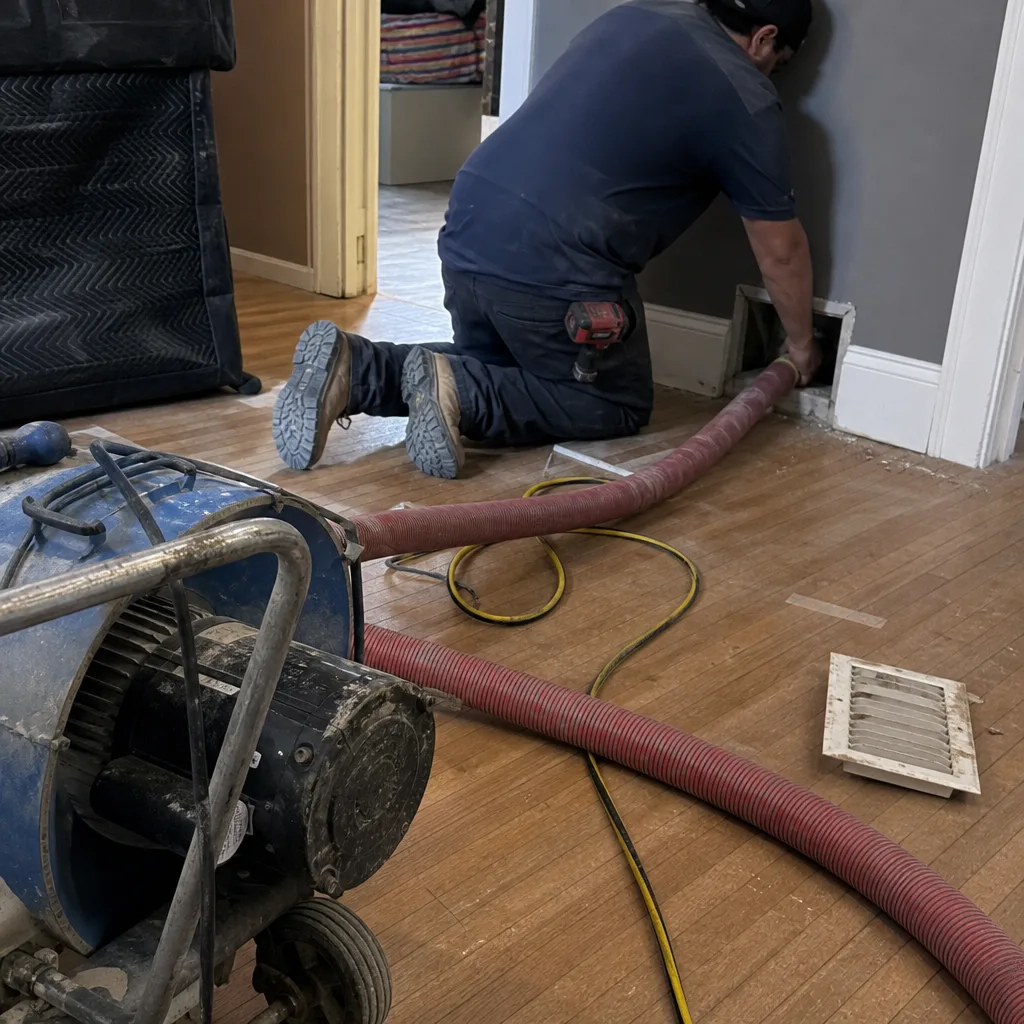 Before
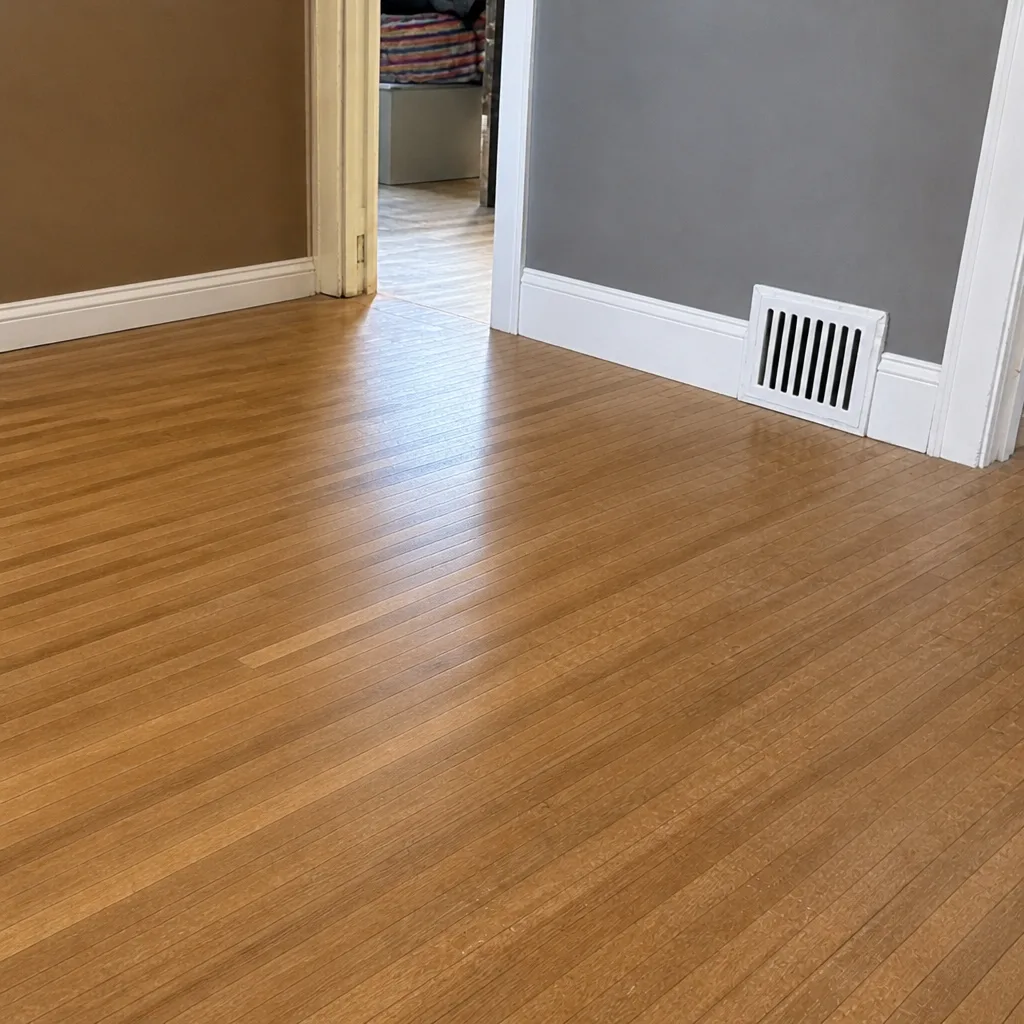 After
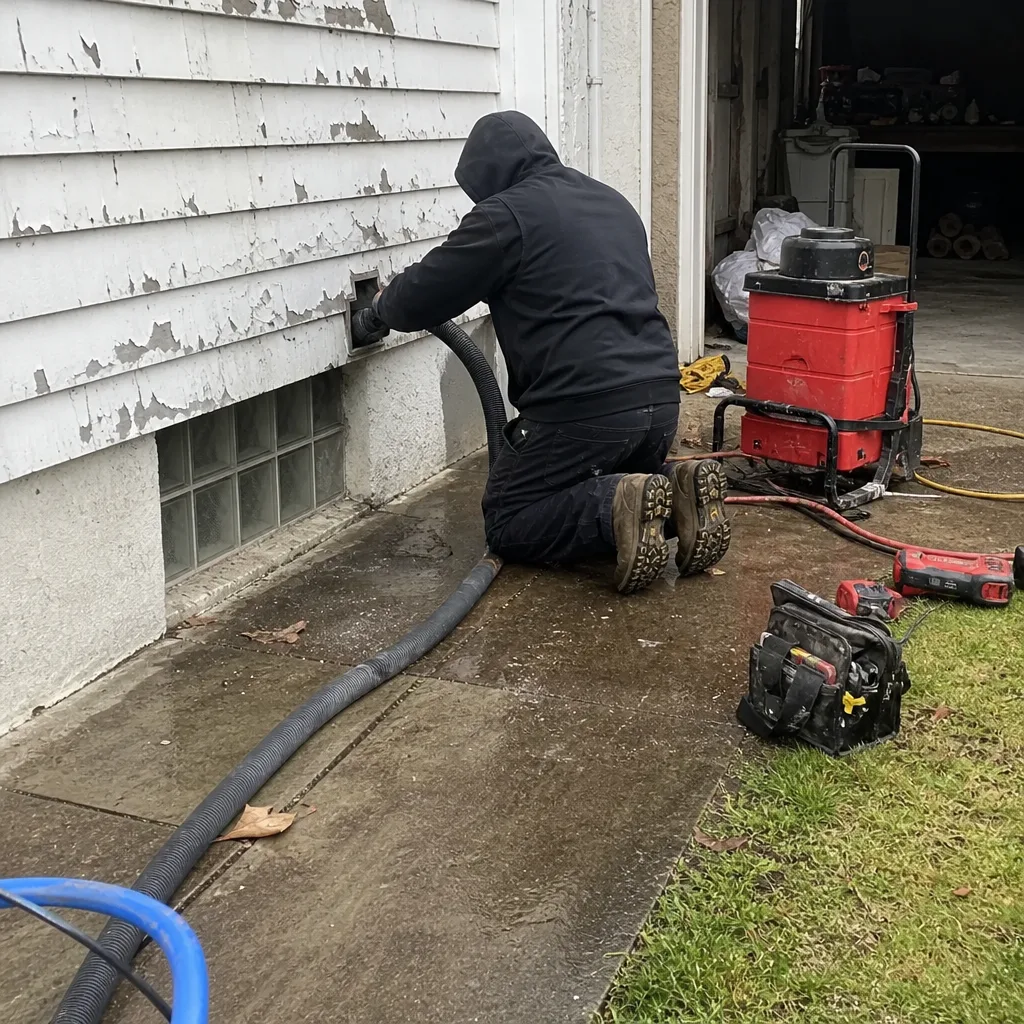 Before
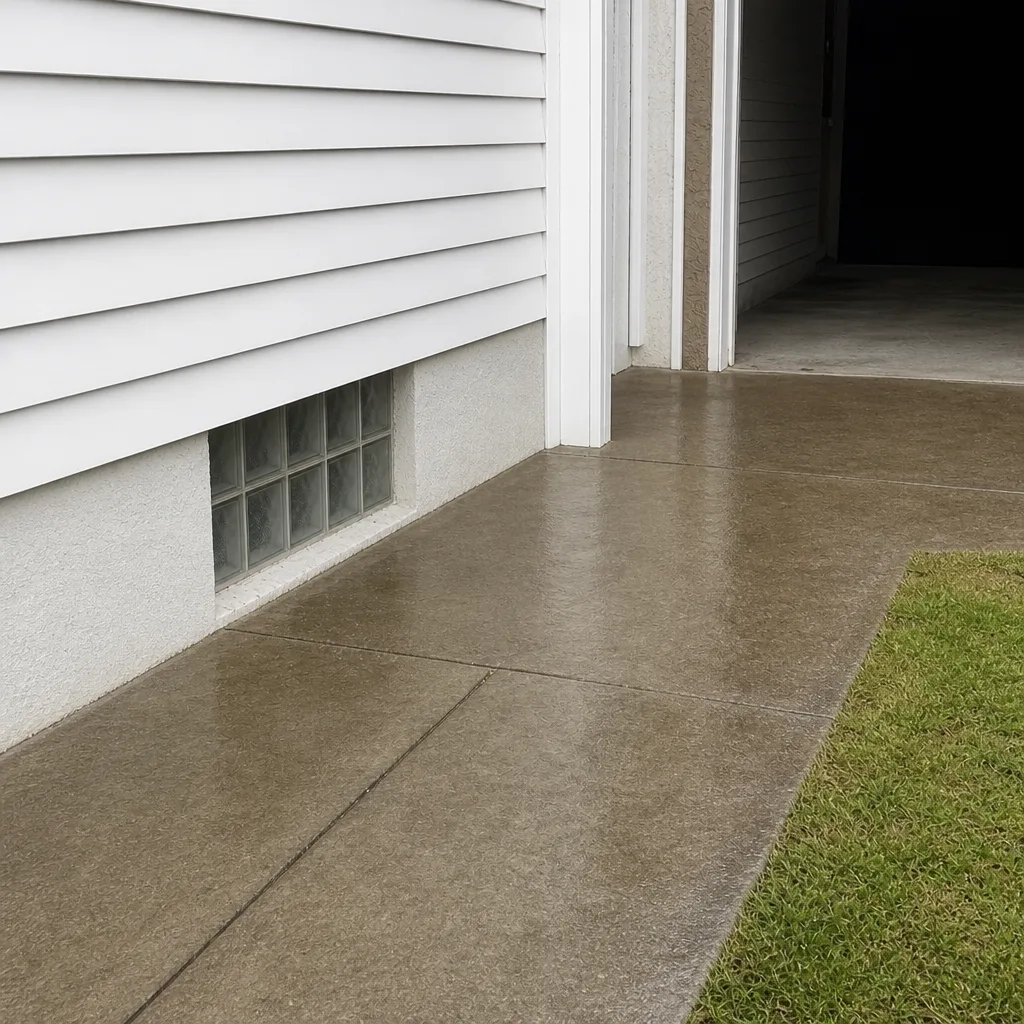 After
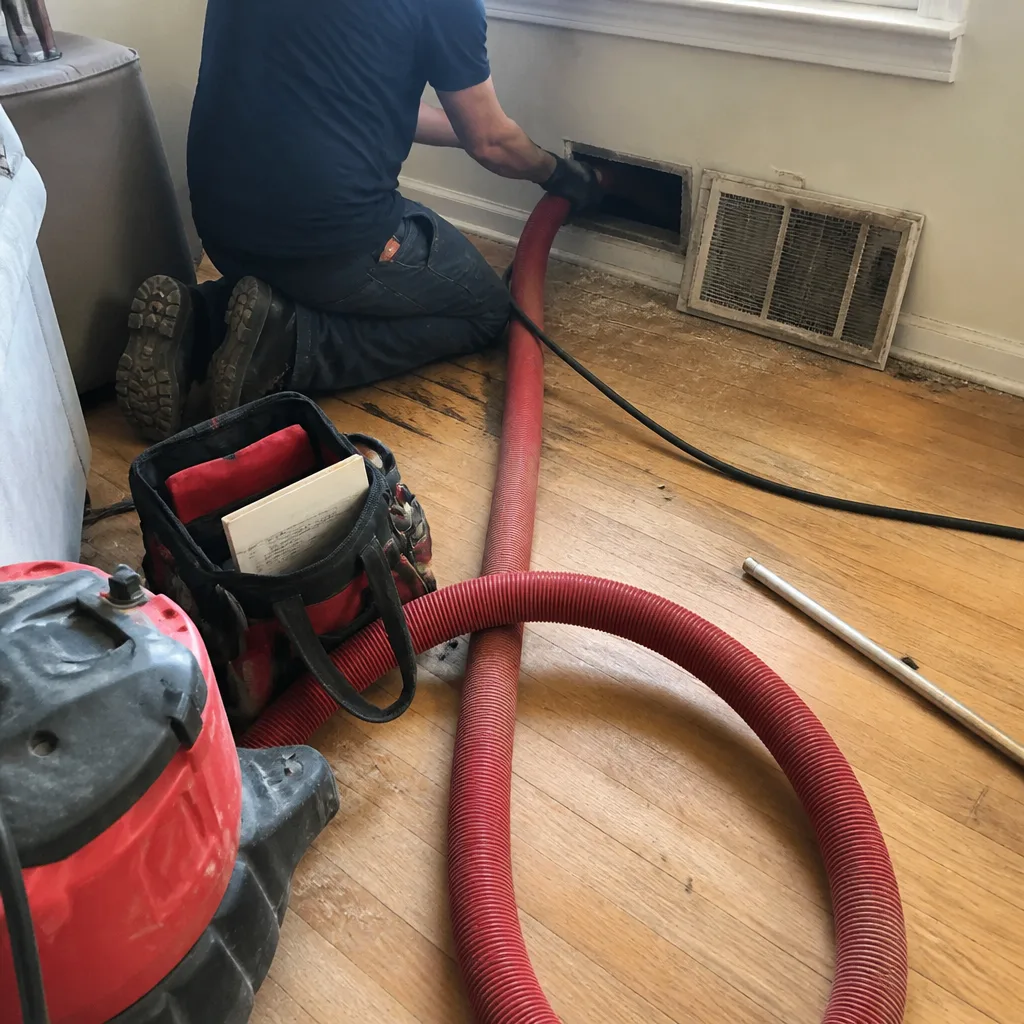 Before
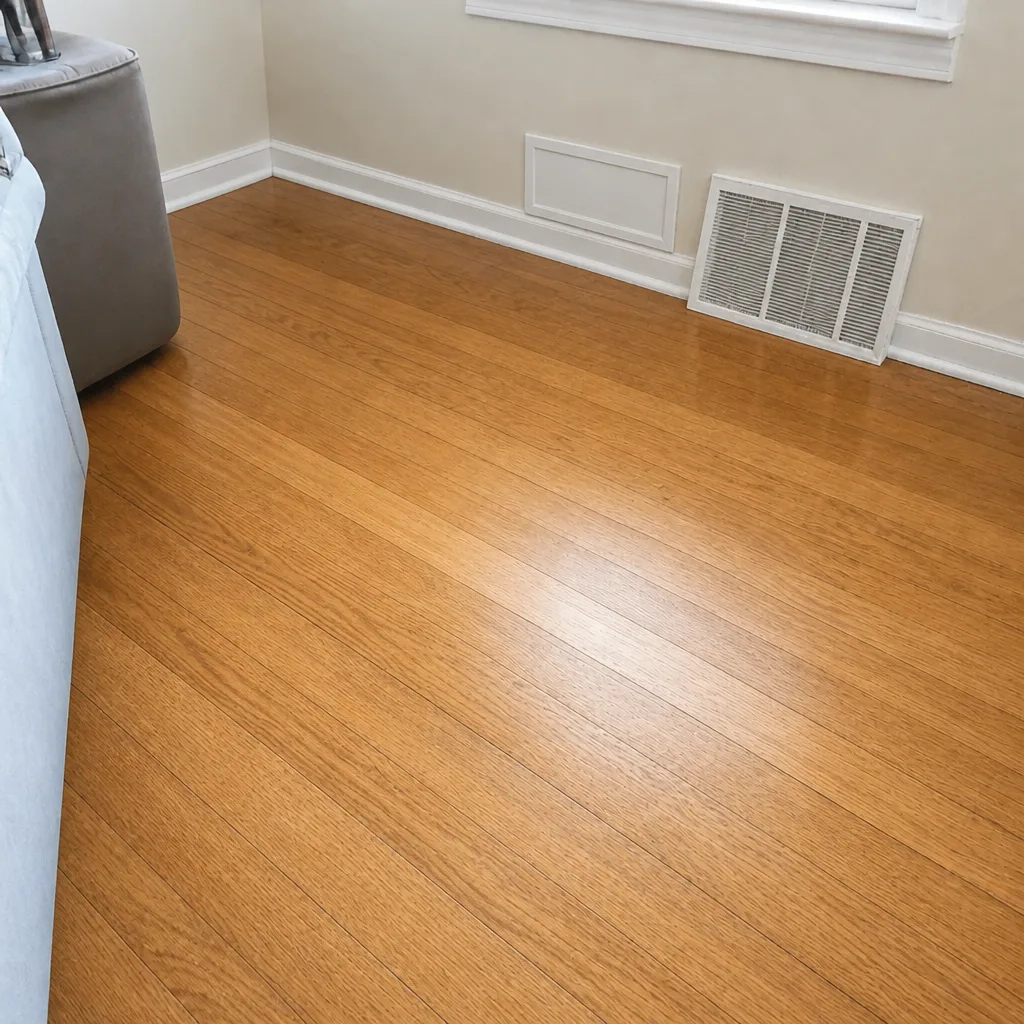 After
When to Call a Professional
Book a professional assessment when you’re seeing symptoms that point inside the system rather than at the thermostat: rooms that are consistently dustier than others, a musty smell that shows up when the heat or air comes on, a blower that’s noisier than usual, cold or warm spots that have gotten worse over a season, or a system that’s come up on an annual maintenance check with airflow complaints. Book it before you renovate a room in an older North Buffalo house, and book it if you’ve never had the ducts inspected since buying the home. If you’ve had a recent cleaning that didn’t change anything, that’s a diagnosis problem and worth a second look. Air Duct Cleaning North Buffalo offers free estimates in North Buffalo – call (877) 379-9769. We answer 24/7. Fast dispatch from 7am to 7pm, Sunday through Friday.
Frequently Asked Questions
It’s priced per system by a written estimate, agreed before work starts, not per vent. Every home is different: number of runs, how heavily the system is loaded, and whether repair or sealing is also needed all affect the scope. Call (877) 379-9769 for an exact quote – estimates are free.
For most North Buffalo homes, an assessment every three to five years is reasonable, and sooner if the symptoms above are showing. Older homes with pre-1970 ductwork, recent renovations, or pets often need it more often, and homes with a long-running moisture issue need the moisture addressed first. Every home is different; the honest answer comes from looking inside the system. Call (877) 379-9769 to schedule an inspection.
Before-and-after photos of the interior ductwork, at the same locations, plus a written record of what was cleaned. Any professional cleaning should deliver this. If a contractor won’t photograph the ducts, ask why before you book. We document every job this way. Call (877) 379-9769 for a free estimate and a clear explanation of the process.
Price usually tracks equipment and scope. A low quote often means contact-vacuum suction with no rotary brush agitation and no negative-air containment, or a scope that only touches the supply registers and skips the returns and air handler. Lower price, less work, less result. Call (877) 379-9769 to compare what’s actually in scope.
Yes, and pre-1970 North Buffalo homes are a large share of what we see. Plaster construction and older ductwork affect the debris profile – heavier, more stratified, more likely to have failed seams – so the process includes checking seams and documenting what turns up. The cleaning method stays the same; the diagnosis gets wider. Call (877) 379-9769 to book an estimate.
Both. Duct repair and sealing is a named service, alongside cleaning, HVAC cleaning, dryer vent cleaning, and air quality and sanitizing. When a cleaning reveals a disconnected run or failed seam, we can address it in the same visit or explain why it’s worth doing first. Call (877) 379-9769 for a free estimate.
The Bottom Line
A thorough duct cleaning in North Buffalo is a system diagnosis, not a single event. It’s the difference between suction and source removal, between a bid with a hose and a bid with rotary brush agitation and negative-air containment, between a job you have to take on faith and one you can see before-and-after photos of. When you’re comparing options, ask what equipment arrives, what gets photographed, what’s in scope, and how the price is set. The answers you get back will tell you which kind of operation you’re talking to. If the diagnosis turns up a problem bigger than cleaning – failed seams, crushed runs, blower strain – that’s worth knowing too. Call (877) 379-9769. We answer 24/7. Fast dispatch from 7am to 7pm, Sunday through Friday. Estimates are free, and the written estimate sets the final price.
Written by the team at Air Duct Cleaning North Buffalo.