
Last updated November 25, 2026
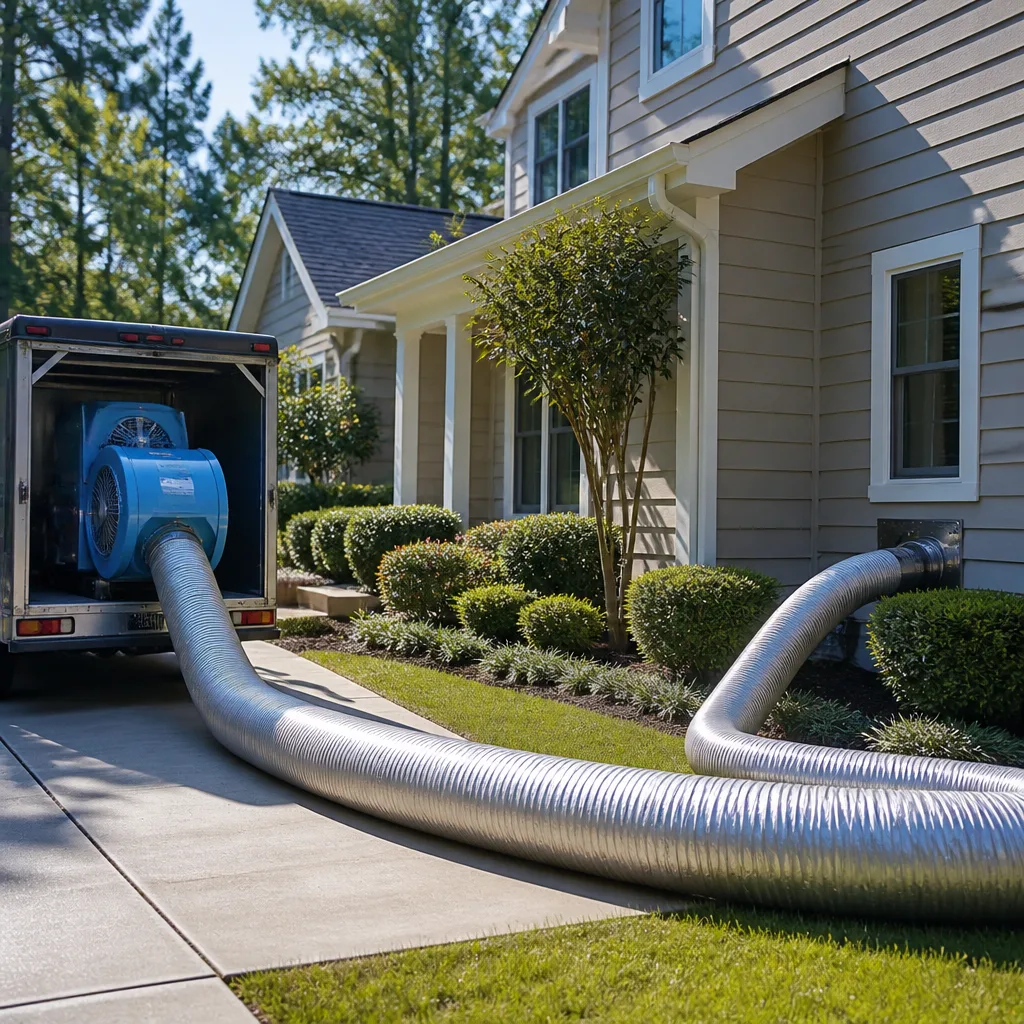 Whole-home duct cleaning
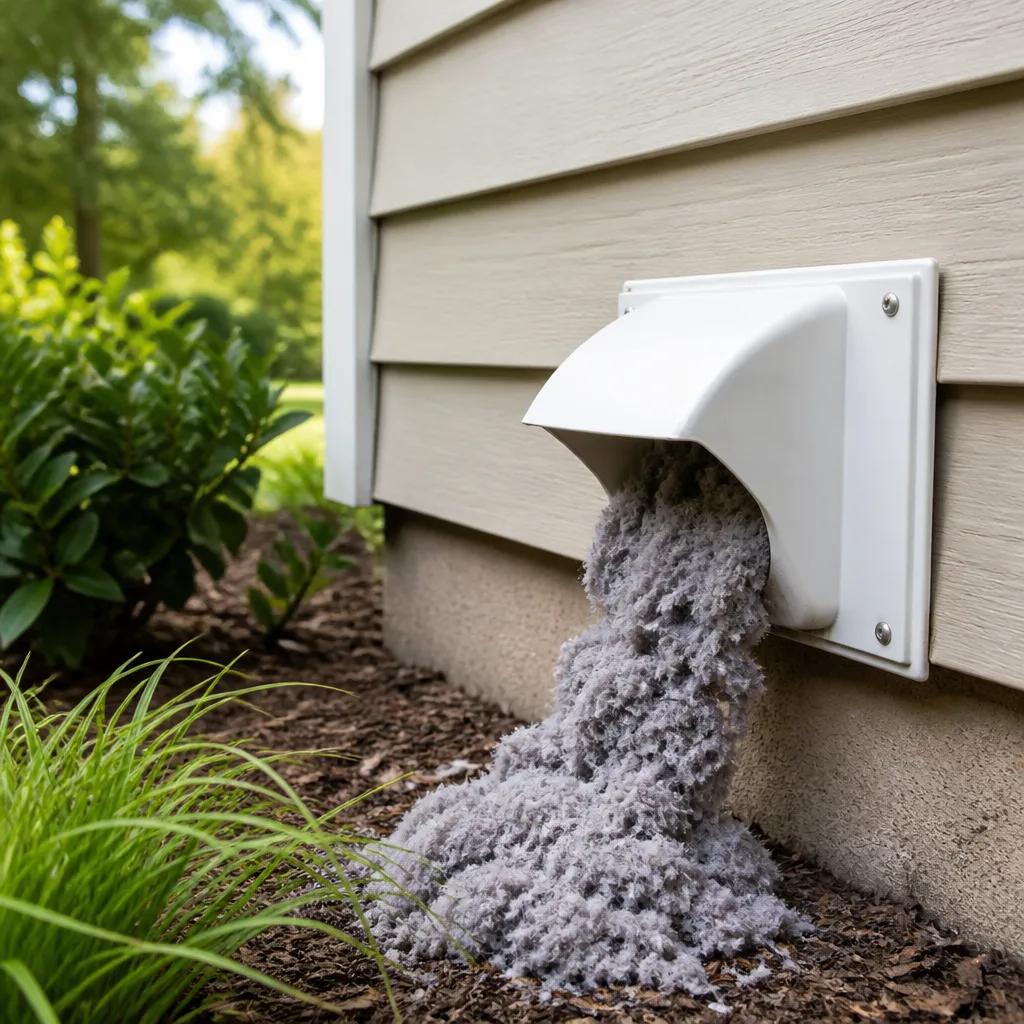 Dryer vent cleaning
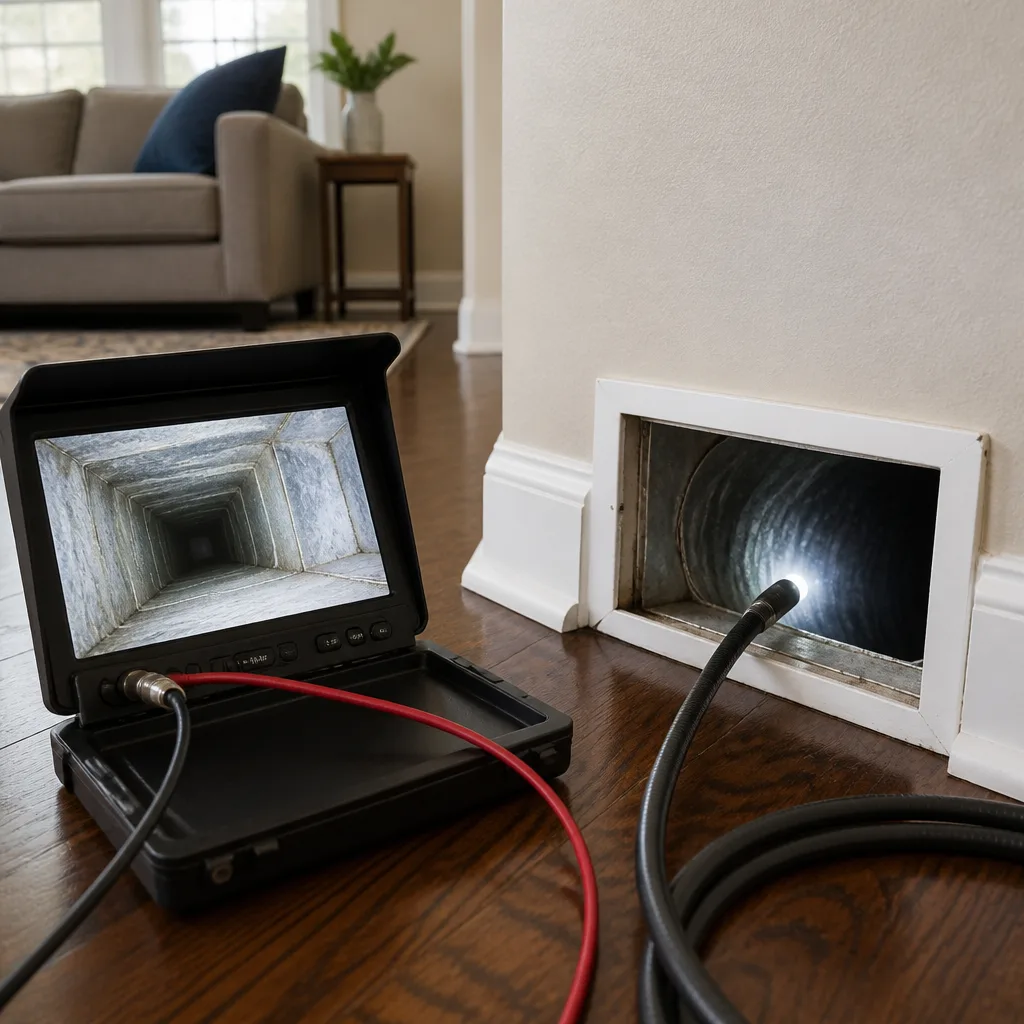 Camera inspection
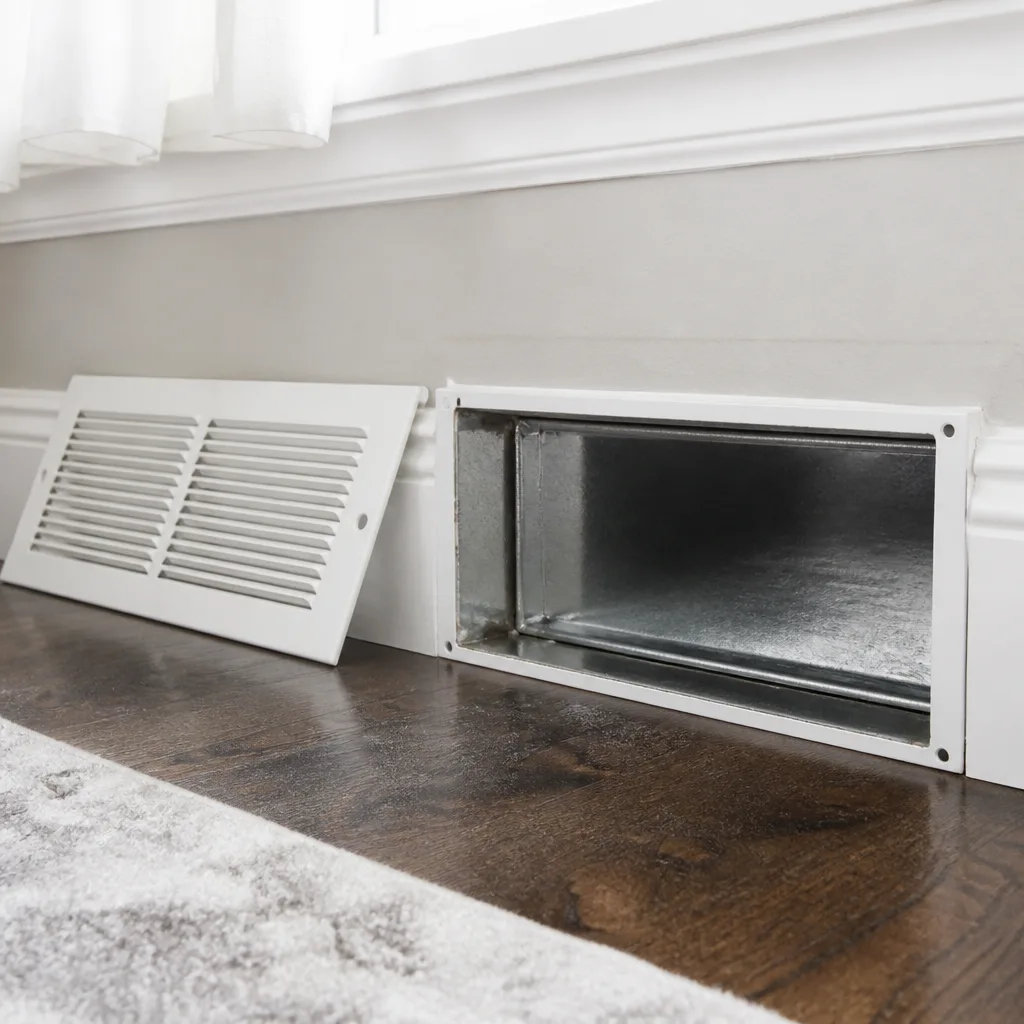 Sanitizing & deodorizing
Whole-system duct and dryer vent check with before-and-after photos - you see exactly what came out of your vents
That "$99 whole-house special" is a bait ad - the real number appears once they are in your hallway, or the "clean" is a shop-vac at the register. We photograph the inside of your ducts before and after instead.
DIY vs Professional Air Duct Cleaning: The North Buffalo Homeowner’s Decision Guide
A consumer drill-brush kit and a household vacuum will clean what you can see at the register face. They leave untouched most of the duct surface area where debris actually accumulates and stays. That’s the honest starting point for this comparison, and it’s why we don’t pretend the two approaches are the same job at different price points. A shop vacuum and a rotary brush kit are real tools that do real work, but they operate at a different scale than the equipment used in source-removal cleaning. This guide maps exactly what DIY can accomplish in a North Buffalo home, what genuinely requires contractor-grade machinery, and how to tell which side of that line your situation falls on.
Quick Answer
DIY air duct cleaning can meaningfully improve register faces, return grilles, and pre-filters, but it cannot achieve the negative air pressure required to remove debris from trunk lines and distant branch runs. Professional cleaning uses rotary brush agitation plus high-volume negative air capture to remove what suction alone can’t reach. In North Buffalo, the decision usually comes down to your duct configuration: accessible trunk lines in a full basement allow more DIY access, while buried plenums and long flexible runs make professional service the only realistic option.
Styles & brands we work with
- Whole-home duct cleaning
- Dryer vent cleaning
- Camera inspection
- Sanitizing & deodorizing
Table of Contents
- Why Consumer Vacuum Suction Can’t Clean Trunk Lines
- What DIY Maintenance Is Legitimately Good For
- A Step-by-Step DIY Maintenance Process
- When DIY Attempts Make Professional Cleaning Harder
- How to Assess Your Home’s Duct Configuration
- The Honest Cost-Benefit Calculation
- What’s Different About Ducts in North Buffalo Homes
- A Decision Framework for Your Specific Home
Why Consumer Vacuum Suction Can’t Clean Trunk Lines
The limiting factor in duct cleaning isn’t the power of the vacuum motor. It’s pressure, volume, and access. A household vacuum generates high static pressure in a small hose, which sounds impressive until you connect it to a duct system that has far more volume than the hose can move air through. Suction drops off fast with distance, and in a typical North Buffalo basement trunk line, the far end of the run sees almost nothing.
Professional duct cleaning works differently. Negative air machines, like the Nikro units we use on-site, pull large volumes of air through the entire duct system while rotary brushes agitate the surfaces. That combination matters because settled debris doesn’t leap into a passing airstream. It clings to duct walls, especially where dust has mixed with condensation and hardened. The Rotobrush rotary brush system mechanically breaks that bond, and the negative air machine captures what’s dislodged before it settles somewhere else.
Here’s what a consumer setup can’t replicate:
- Air volume: A shop vacuum moves a fraction of the cubic feet per minute that a negative air machine pulls. Debris in a 20-foot branch run simply doesn’t get drawn toward the vacuum head.
- Wall contact: Suction alone removes loose dust from the duct floor. It doesn’t scrub the sides and top of the duct, where most accumulation actually lives.
- Containment: Without negative pressure holding the system under vacuum, agitating debris sends it into living spaces instead of into a filter. We use Abatement Technologies filtration equipment specifically because capturing dislodged contaminants is the whole point.
- Reach: A drill-brush kit cleans the first few feet past a register. Trunk lines and plenums are tens of feet away and around multiple turns.
That’s the physics in plain terms. Consumer equipment can’t generate the conditions needed for source removal in trunk lines, no matter how long you run it. If you want the full technical picture of how professional cleaning is set up, the air duct cleaning page walks through the equipment and process we bring to a North Buffalo home.
What DIY Maintenance Is Legitimately Good For
We mean this sincerely: there’s real value in what a homeowner can do. Register faces, return grilles, and filter maintenance are the front line of duct hygiene, and keeping up with them genuinely reduces what accumulates deeper in the system. This is routine surface maintenance, and it’s worth doing well.
What DIY handles effectively:
- Register and grille cleaning: The visible face of every supply register collects dust, pet hair, and cooking film. Removing and washing these takes minutes and makes an immediate visible difference.
- Return grille cleaning: Return grilles pull the most air and catch the most debris. They’re also the easiest component to access.
- Pre-filter maintenance: If your system has a pre-filter or a washable filter ahead of the main filter, keeping it clear protects airflow and extends the life of the filter behind it.
- Filter changes on schedule: A clogged filter restricts airflow, which raises energy use and can stress the blower. This is the single highest-value maintenance task a homeowner can own.
- Surface dust control: Keeping floors, shelves, and return-air paths clean reduces what enters the system in the first place.
Notice what’s missing: anything past the register boot. The moment you’re reaching a brush into the duct, you’re beyond what consumer maintenance can meaningfully accomplish, and in some configurations you’re doing more harm than good. If your goal is cleaner air throughout the house, the equipment difference is what closes the gap. Dryer vents are a separate but related story, and dryer vent cleaning is worth treating as its own safety task rather than an afterthought to duct maintenance.
A Step-by-Step DIY Maintenance Process
If you’re going to do the register-level work yourself, do it in an order that prevents recontamination. Here’s the sequence we’d suggest for a typical North Buffalo home:
- Turn the system off. Set the thermostat to off so the blower doesn’t move dust while you’re working. Give it a minute to stop.
- Change or clean the filter first. Doing this before anything else means the air handler isn’t pulling through a loaded filter while you disturb dust.
- Remove the supply registers. Most are held by two screws. Set them aside and note which location each came from.
- Wash the register faces. Warm water with a mild detergent in a utility sink or tub. Dry them fully before reinstalling so you’re not pushing moisture into the duct boot.
- Clean the return grille. Return grilles catch more than supply registers and are usually larger. A vacuum brush attachment works well, followed by a wipe-down.
- Vacuum the visible boot. With a crevice tool, reach just into the register boot and remove loose debris you can see. Stop at the point where the duct turns or where you’d need to force the tool.
- Reinstall everything and restore the thermostat. Run the fan for a few minutes and change the filter one more time if you disturbed a lot of dust.
This process is genuinely useful. It’s also a finite job: after step seven, you’ve done everything consumer equipment can safely accomplish. For a home where the ducts are known to be clean, this routine plus regular filter changes may be all you need for years. The question is whether your ducts are actually clean, which brings us to the harder topic.
When DIY Attempts Make Professional Cleaning Harder
A homeowner attempting deeper access than the register boot can turn a straightforward cleaning job into a repair job. We’ve seen this in North Buffalo, and the pattern is consistent enough to describe. Three failure modes come up repeatedly.
Dislodged debris. This is the most common and the most frustrating. A homeowner pushes a drill brush or a shop vac wand into a branch run, breaks loose a shelf of hardened dust, and then can’t extract it. The debris doesn’t disappear. It settles further down the run, or it gets drawn into the air handler when the system comes back on and coats the blower wheel and evaporator coil. What was a cleaning job becomes a cleaning job plus component cleaning.
Punctured flexible duct. Flexible duct has a thin inner liner, and it tears easily. A brush head, a rigid wand, or a drill attachment forced past a bend can open a hole you can’t see. That hole leaks conditioned air into a crawlspace or wall cavity, which shows up as a hot or cold room, higher energy use, and a mystery the homeowner usually attributes to something else. Repairing it means accessing and replacing that run.
Disturbed insulation. Interior duct insulation and the insulation around duct boots are fragile. Aggressive vacuuming or brushing can pull it loose. Loose insulation fibers then travel through the system, and they’re far harder to remove than ordinary dust because they mat and cling.
Why does this matter for cost? Because professional cleaning is priced per system, and a system with damaged flex runs or dislodged debris in the wrong places needs more work than one in original condition. The honest DIY calculation has to include the risk of making the next professional visit larger. When ducts need repair or sealing after damage, that’s a separate scope from cleaning, and we handle it as HVAC cleaning plus repair work rather than treating it as one job.
How to Assess Your Home’s Duct Configuration
Before you decide anything, look at how your ducts are actually built. The configuration determines whether meaningful DIY access even exists. Most North Buffalo homes fall into recognizable patterns, and the pattern tells you a lot.
Full basement with exposed trunk lines. This is the friendliest configuration for homeowner access. If the trunk line is visible in an unfinished basement, you can see the branch takeoffs, the dampers, and the duct insulation condition. You can identify leaks and disconnected joints visually. That said, visible doesn’t mean accessible for cleaning: the branches still run inside walls to reach the rooms above.
Buried plenums and enclosed chases. When the main supply plenum or trunk runs inside a finished ceiling, a chase, or behind drywall, you have no meaningful access. Everything has to happen from the register boots and the air handler, which is professional territory.
Long flexible runs to second-floor rooms. Flex duct is common in North Buffalo homes that have had additions or upper-floor retrofits. Long flexible runs are the hardest to clean and the easiest to damage. Consumer equipment has essentially no reach into these.
Original galvanized trunk with short branch runs. Older homes with original metal ductwork in the basement often have short, accessible branches. This is the best case for professional cleaning and also the configuration where DIY register work plus regular filter changes goes furthest.
Here’s a useful test you can run in five minutes: walk your basement or utility area and count how many feet of visible trunk line you can actually reach. Then note where the branches disappear into walls or floors. If the visible portion is a small fraction of the total run, DIY access is limited to the registers, and that’s the honest answer.
The Honest Cost-Benefit Calculation
The cost question deserves a straight answer. Professional air duct cleaning in North Buffalo is priced per system by written estimate, not per vent and not by the hour. The estimate is free, and the price is set before work starts. What we won’t do is quote a teaser number here, because a real range depends on your system’s size and configuration, and a coupon figure that doubles on-site is exactly the bait-and-switch this guide is trying to help you avoid.
What we can lay out honestly is the cost of each approach in real terms:
- DIY equipment: A drill-brush kit, a shop vacuum, and filter supplies cost real money up front. That investment buys you register-level cleaning and nothing past the boot.
- What DIY delivers: Cleaner register faces, a clear return grille, a maintained filter, and a modest reduction in what enters the system. It does not remove accumulated debris from trunk lines or branch runs.
- Professional cleaning: Rotary brush agitation plus negative air capture with filtration equipment, covering the full system including the air handler, plenum, trunk lines, and branch runs. Priced per system by written estimate, agreed before work begins.
- What professional cleaning delivers: Source removal, meaning debris is extracted rather than redistributed. Before-and-after photos of your own ducts document what changed.
The comparison isn’t really equipment cost versus service cost. It’s the cost of a partial job that leaves the majority of duct surface area untouched, versus the cost of a complete one. If your ducts are already clean and you maintain filters well, DIY register work may be entirely sufficient. If you have visible debris at registers, musty smells, or a system you’ve never had cleaned, the equipment gap means DIY can’t close it. A written estimate against a free inspection is the only way to compare honestly for your specific house.
What’s Different About Ducts in North Buffalo Homes
North Buffalo’s housing stock shapes this decision in ways a generic guide won’t tell you. The neighborhood’s mix of early-1900s homes, mid-century construction, and later additions produces a wide range of duct configurations on the same block, sometimes in the same house.
The key local factor is heating season length. North Buffalo homes run their furnaces for a large share of the year, which means the air handler moves a high volume of air through the duct system over many months. That long duty cycle has two effects. First, dust and debris accumulate faster than in milder climates because more air passes through. Second, any leak or disconnected joint wastes conditioned air for a longer stretch, which makes sealing and repair more valuable here than in a place where the system runs a few weeks a year.
Basements matter in North Buffalo more than in many markets. A full basement with exposed trunk lines is common, and it’s the configuration that gives a homeowner the most visibility into duct condition. Moisture in a basement also affects duct systems: condensation on cold metal ductwork in summer can turn loose dust into a hardened layer that suction won’t touch. That hardened layer is a rotary brush job, not a shop vac job.
If you’ve had duct cleaning in North Buffalo done before and want to keep it that way, the maintenance routine above plus filter discipline will carry you a long way. If you’ve never had it done, or you suspect debris has accumulated over many heating seasons, the register-level approach won’t reach where the accumulation lives. When you’re ready to book, pick up the phone and call (877) 379-9769. We answer 24/7, with fast dispatch from 7am to 7pm, Sunday through Friday.
A Decision Framework for Your Specific Home
Work through these questions in order. The first one that applies usually settles it.
- Do you have visible debris or a musty smell at the registers? If yes, the problem is past the boot. Professional cleaning with rotary brush agitation and negative air capture is the appropriate response.
- Have the ducts never been cleaned, or hasn’t it been done in many heating seasons? Accumulation in trunk lines and branch runs is likely. DIY can’t reach it, so plan on professional service.
- Are the trunk lines and plenum enclosed or buried in finished space? If your access is limited to registers, DIY maintenance is all you can do, and it won’t address the duct interior.
- Are the visible ducts in good condition with no leaks or disconnected joints? This is where DIY register work plus filter maintenance makes the most sense as an ongoing routine.
- Has anyone recently poked a brush or wand into the ducts? If a DIY attempt has already dislodged debris, get a professional inspection before running the system hard.
Common Mistakes to Avoid
- Running the furnace while you clean. Every bit of dust you disturb gets pulled into the air handler and deposited on the blower and coil. Shut the system off first and change the filter after.
- Using a shop vacuum as if it were a duct cleaning machine. A shop vacuum’s high-pressure, low-volume suction is the wrong tool for a large duct cavity. It moves the dust around inside the duct rather than out of it.
- Forcing a brush past a bend in flex duct. Thin inner liners tear, and you won’t see the hole until a room stops heating properly. In a North Buffalo home with long flexible runs to upper floors, this is the most avoidable damage there is.
- Cleaning only the registers you can see. Supply registers are the visible half of the picture. Return air handles more airflow and catches more debris, and it’s usually the more neglected side.
- Skipping the basement inspection. North Buffalo homes often have visible trunk lines and dampers that reveal disconnected joints, sagging supports, or moisture condensation. Ten minutes of looking prevents a lot of guessing.
- Accepting a per-vent quote without a written per-system estimate. A per-vent price punishes larger homes and rewards nothing. Ask for a per-system written estimate before anyone starts.
- Assuming duct cleaning is the same as sealing. Cleaning removes debris; sealing closes the leaks that let debris and conditioned air back out. They’re separate scopes, and a house in North Buffalo with visible basement leaks often needs both.
See the difference
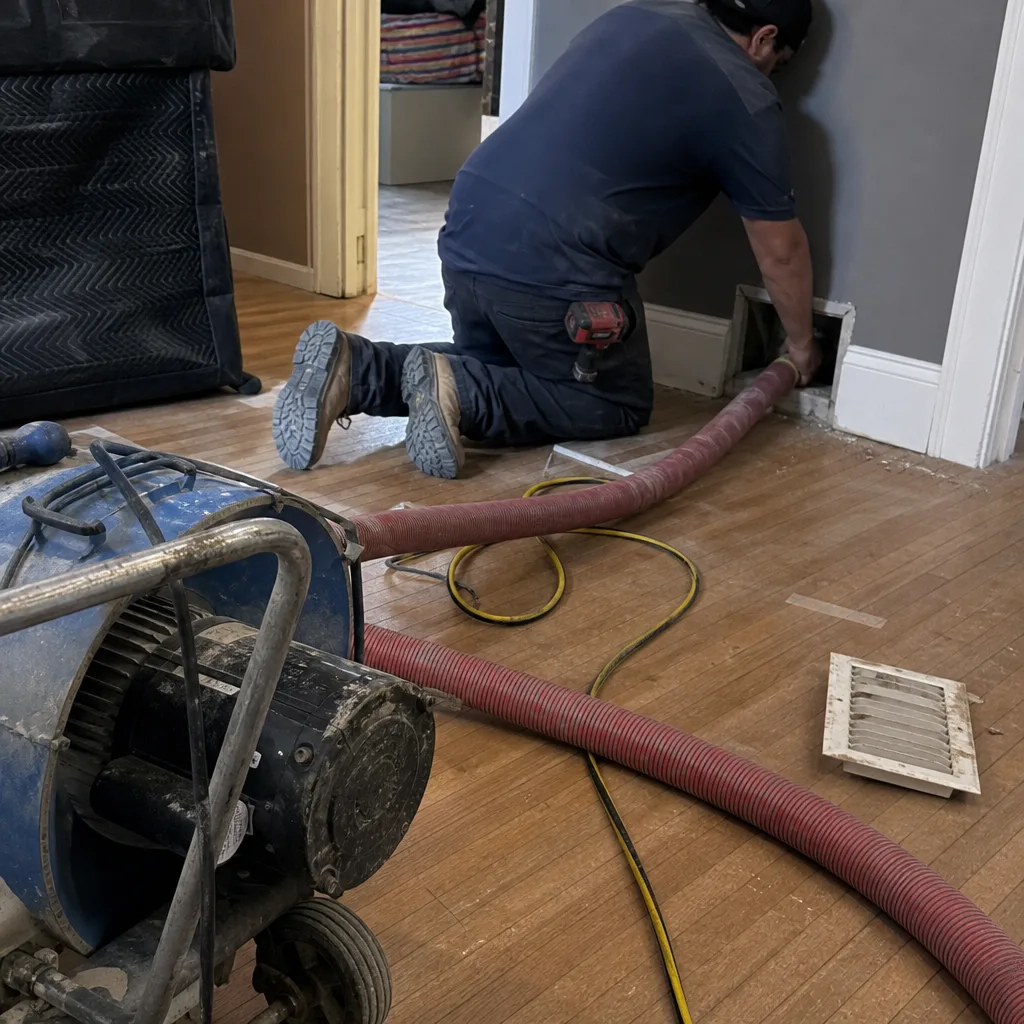 Before
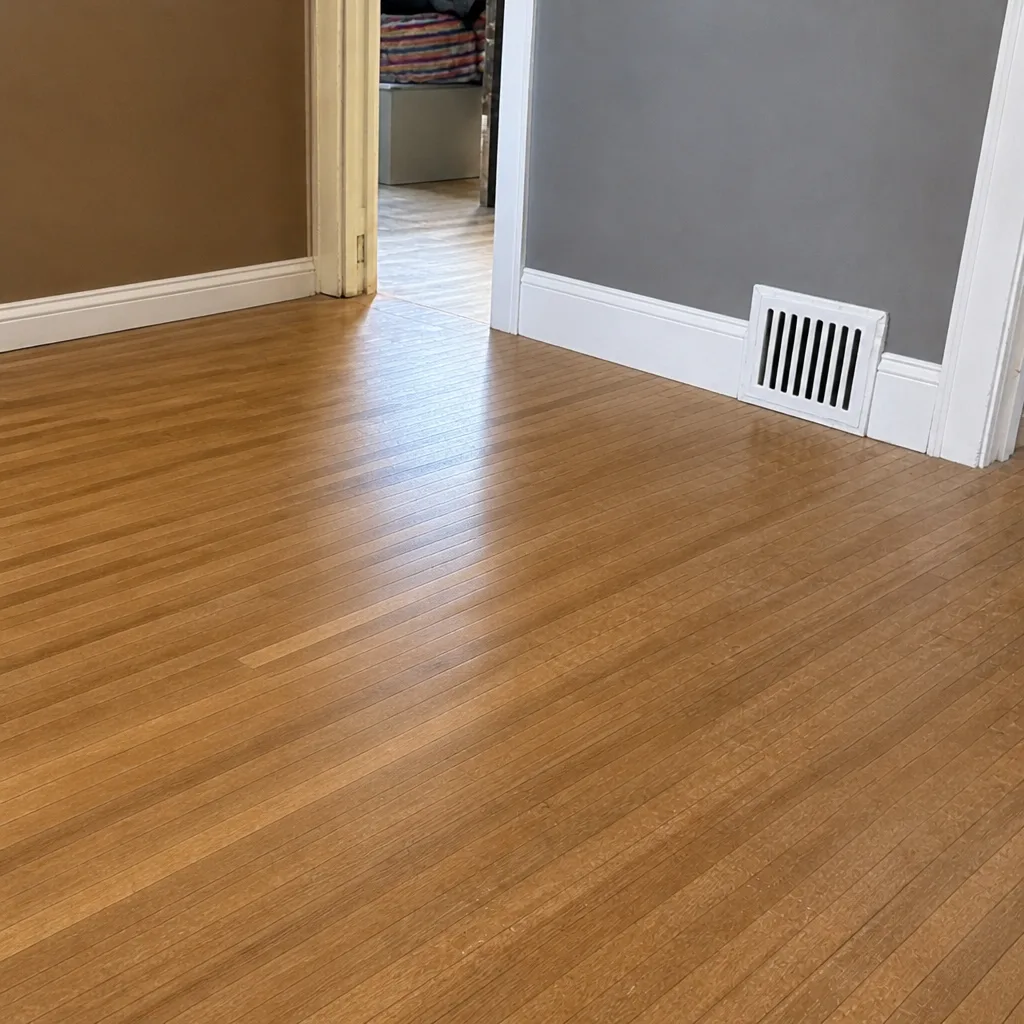 After
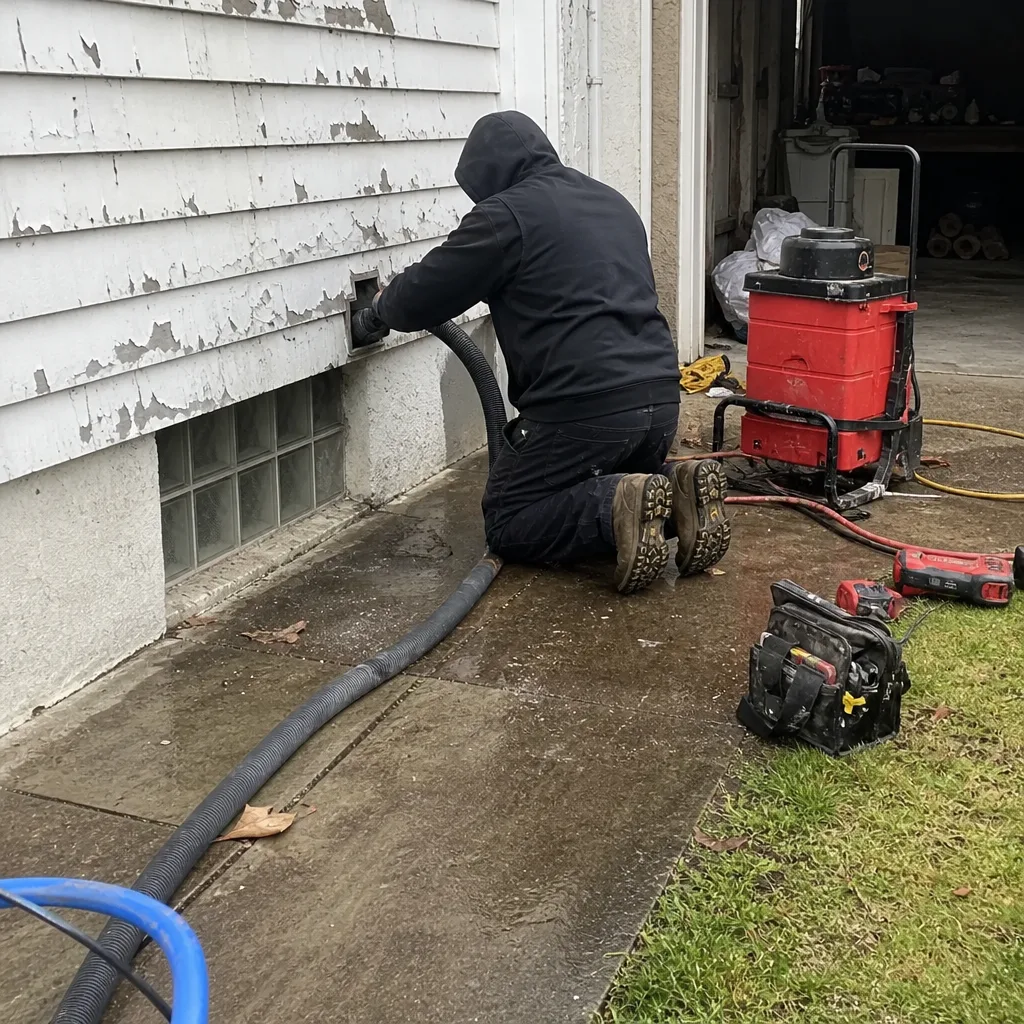 Before
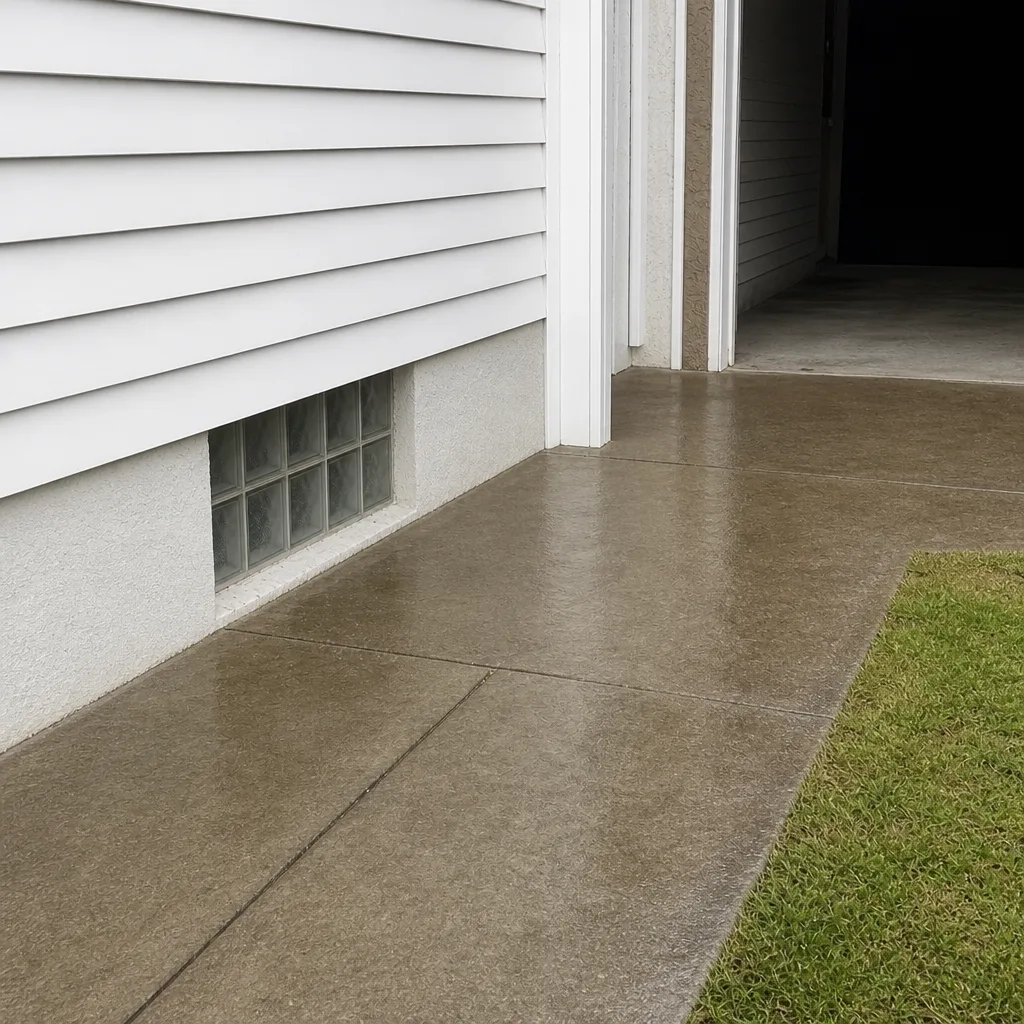 After
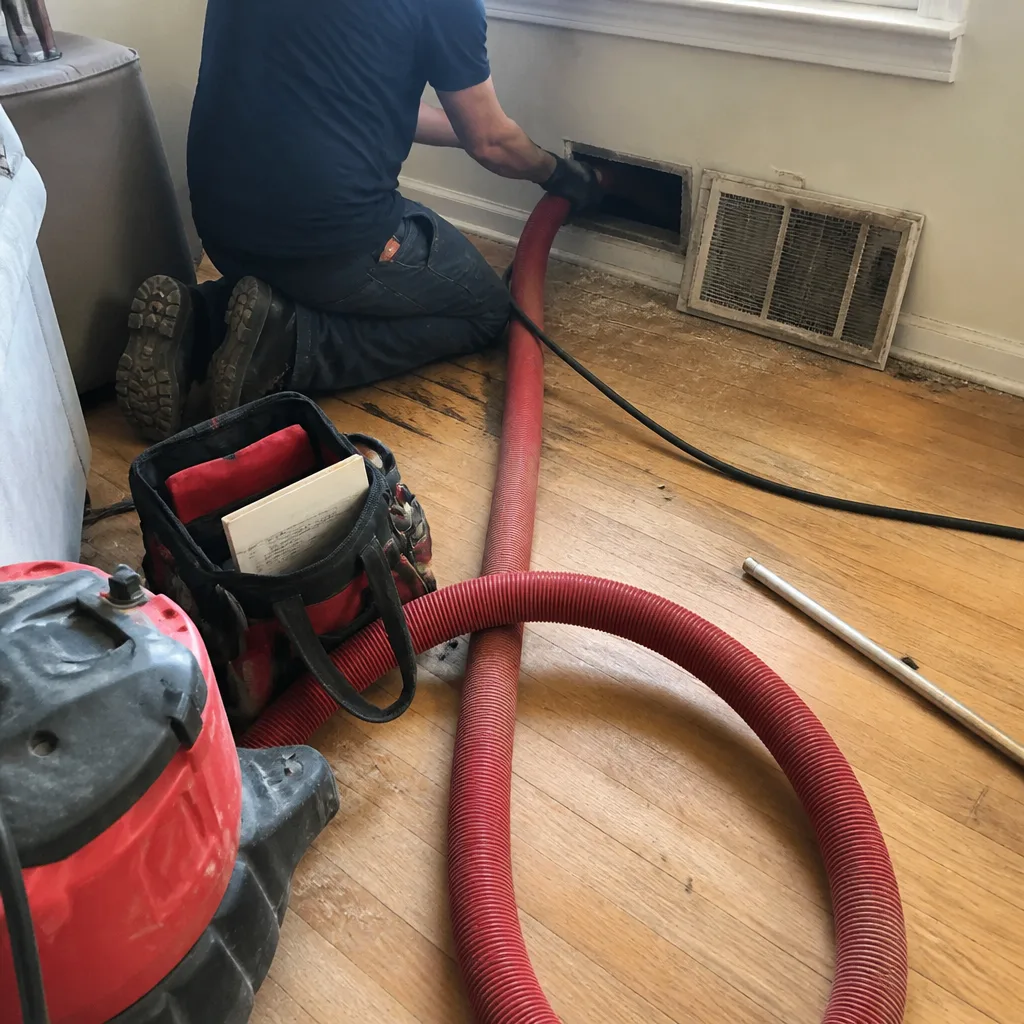 Before
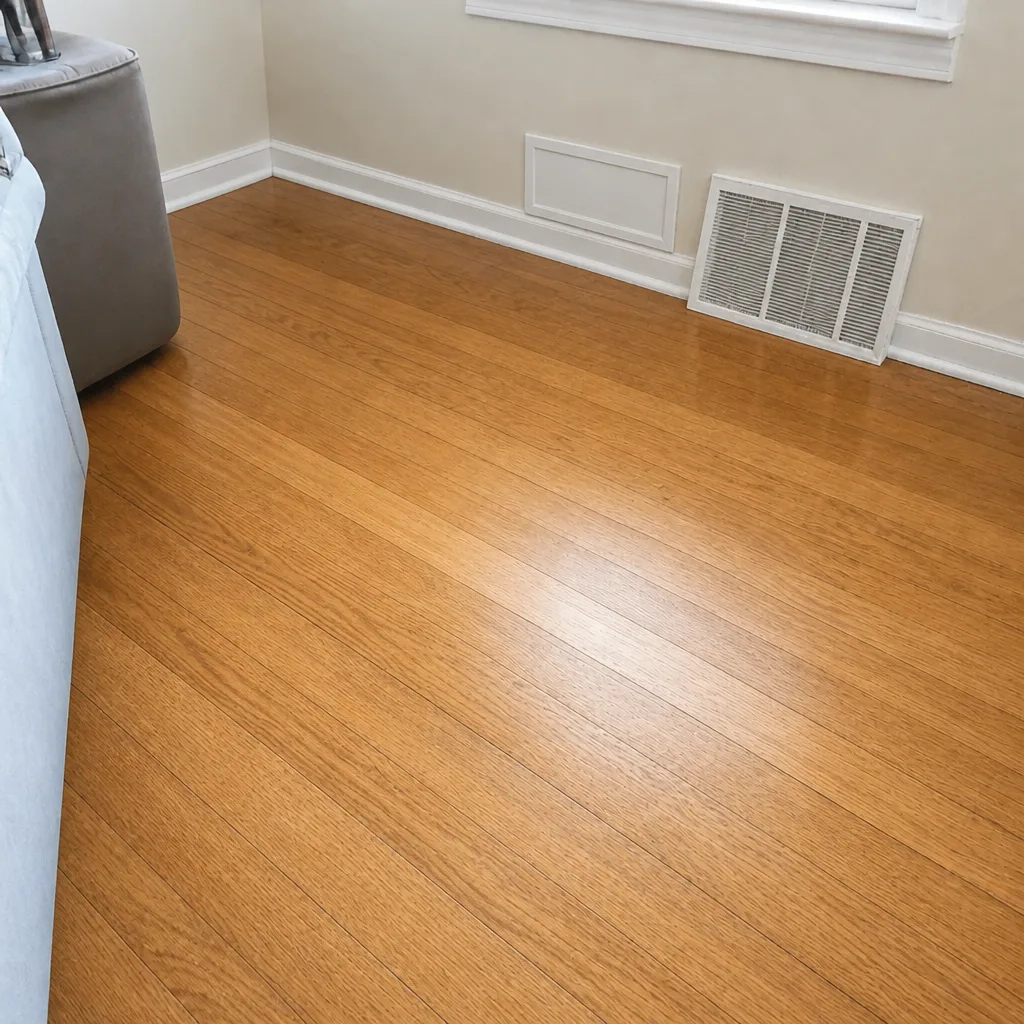 After
When to Call a Professional
Call a professional when debris is visible at the registers, when there’s a musty smell that returns after cleaning, when someone in the household has allergy or respiratory symptoms that track with time indoors, or when the system has never been cleaned and has run many North Buffalo heating seasons. Also call if a DIY attempt has dislodged debris into the system or damaged a flex run; the sooner it’s assessed, the smaller the repair. Professional cleaning handles the full air pathway with rotary brush agitation and negative air capture, and it produces documentation you can see rather than take on faith. Air Duct Cleaning North Buffalo offers free estimates in North Buffalo by written per-system price agreed before work begins. Call (877) 379-9769. We answer 24/7, and fast dispatch runs from 7am to 7pm, Sunday through Friday.
Frequently Asked Questions
No. A shop vacuum can remove loose dust near a register boot, but it can’t generate the air volume or the wall contact needed to clean trunk lines and branch runs. Professional cleaning relies on high-volume negative pressure plus rotary brush agitation to break the bond between debris and duct walls. In a North Buffalo system with basement trunk lines, the shop vac reaches a small fraction of the total run. Call (877) 379-9769 for a free per-system estimate if you want the whole system done.
Professional air duct cleaning in North Buffalo is priced per system by written estimate, and the estimate is free. The price depends on the size and configuration of your system, which is why we don’t quote a teaser number that changes on-site. You’ll get one flat price per system agreed before work starts, plus before-and-after photos of your own ducts. Call (877) 379-9769 for your free estimate.
A low coupon price typically buys a brief skim of the easiest-to-reach registers, with the real work added on-site at a higher cost. A genuine per-system cleaning covers the air handler, plenum, trunk lines, and branch runs using rotary brush equipment and negative air capture with filtration. Ask for a written per-system estimate and ask what equipment will actually be on site before you book. Call (877) 379-9769 and we’ll walk through what a full-system cleaning includes.
Yes, at the register level. Register faces, return grilles, and filter maintenance are genuinely worthwhile and reduce what accumulates deeper in the system. What’s not worth doing is forcing brushes or wands past the register boot, because older North Buffalo homes often have flex runs and fragile insulation that damage easily. Think of DIY as front-line maintenance and professional cleaning as the deep service.
There’s no fixed interval that fits every home. What we can say is that the decision should be driven by evidence: visible debris at registers, returning musty smells, a system that’s never been cleaned, recent renovation dust, or a damaged and sealed run that may have leaked. In a North Buffalo home that runs its furnace for many months a year, the accumulation rate is higher than in a mild climate. Call (877) 379-9769 and we’ll help you decide based on what’s actually in your system.
Cleaning is the right first step, because musty smells usually mean organic debris has accumulated where moisture is present. Removing that debris often resolves the smell. If the moisture source is still there, though, the smell can return. That’s why we look at the air pathway as a whole: cleaning first, then repair and sealing where there are leaks, and sanitizing with Guardsman-grade surface products when warranted. Call (877) 379-9769 for an assessment.
The Bottom Line
DIY air duct cleaning and professional air duct cleaning aren’t the same job at different price points. DIY does real work at the register level: washing grilles, cleaning return faces, and maintaining filters. Professional cleaning does the work the physics demands inside the system: rotary brush agitation of duct walls, negative air capture, and filtration. If your ducts are clean and well maintained, the DIY routine plus filter discipline goes a long way in a North Buffalo home. If your ducts have never been cleaned, show visible debris, or smell musty, the equipment gap means consumer tools can’t close the distance. For a free written per-system estimate, call Air Duct Cleaning North Buffalo at (877) 379-9769. We answer 24/7, with fast dispatch from 7am to 7pm, Sunday through Friday. Our technicians have up to 9 years of experience.
If you’re starting at the beginning and want the full picture of how professional service works, our Air Duct Cleaning North Buffalo overview is the place to start. Air you can’t see deserves equipment you can trust.
Written by the team at Air Duct Cleaning North Buffalo.