
Last updated November 25, 2026
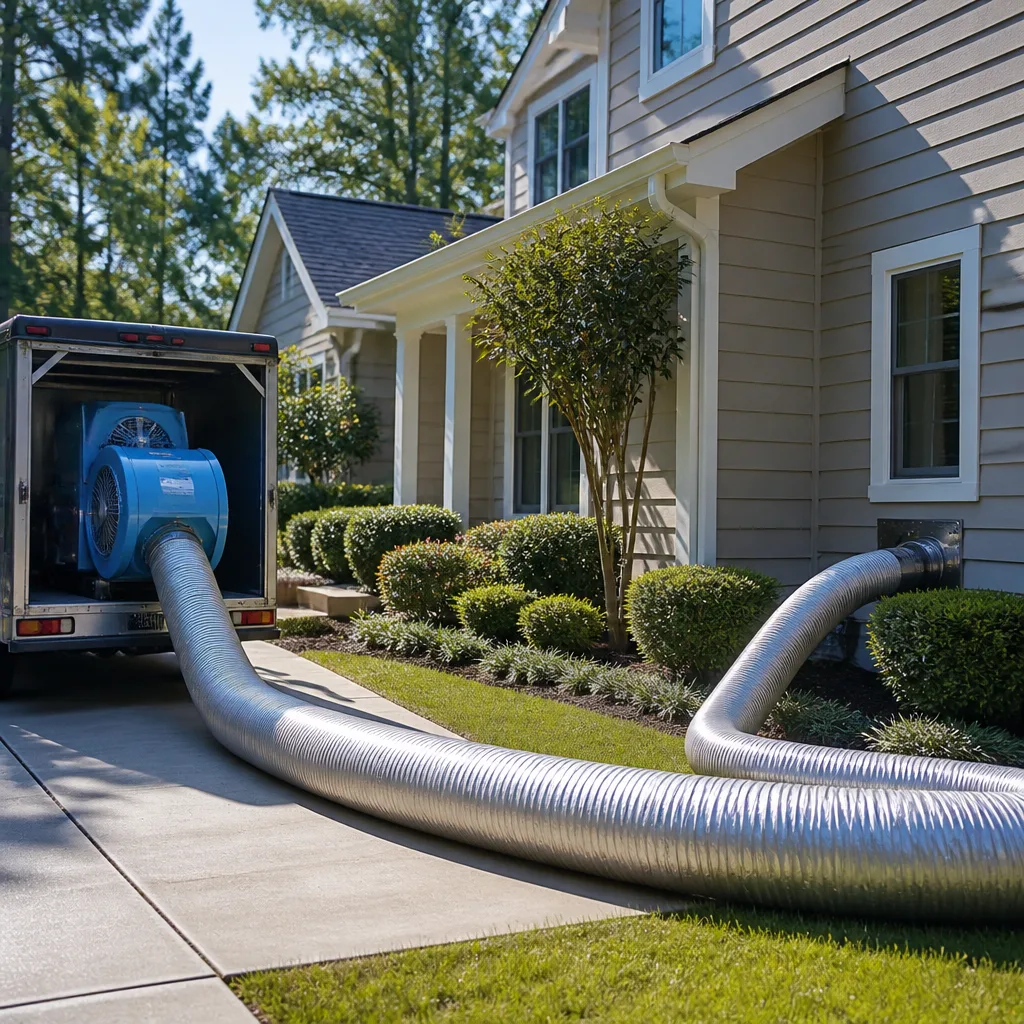 Whole-home duct cleaning
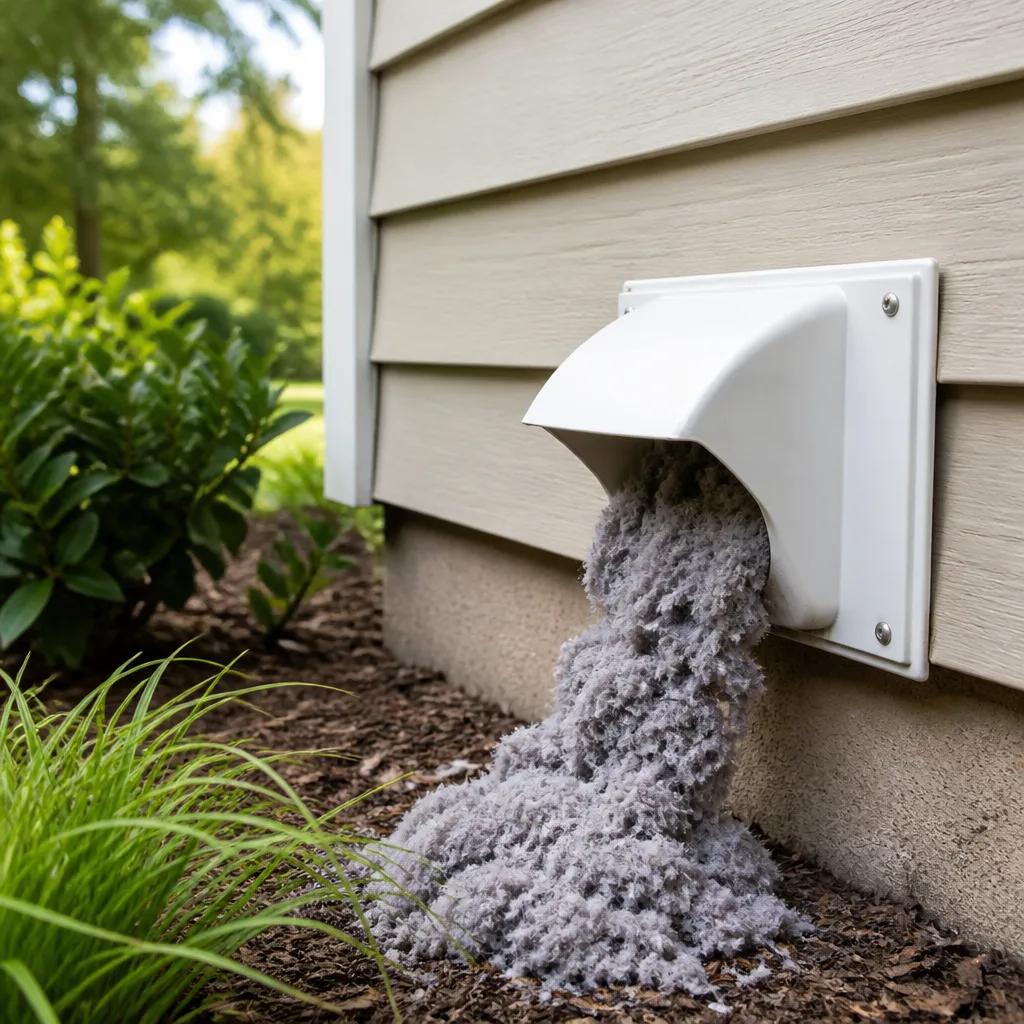 Dryer vent cleaning
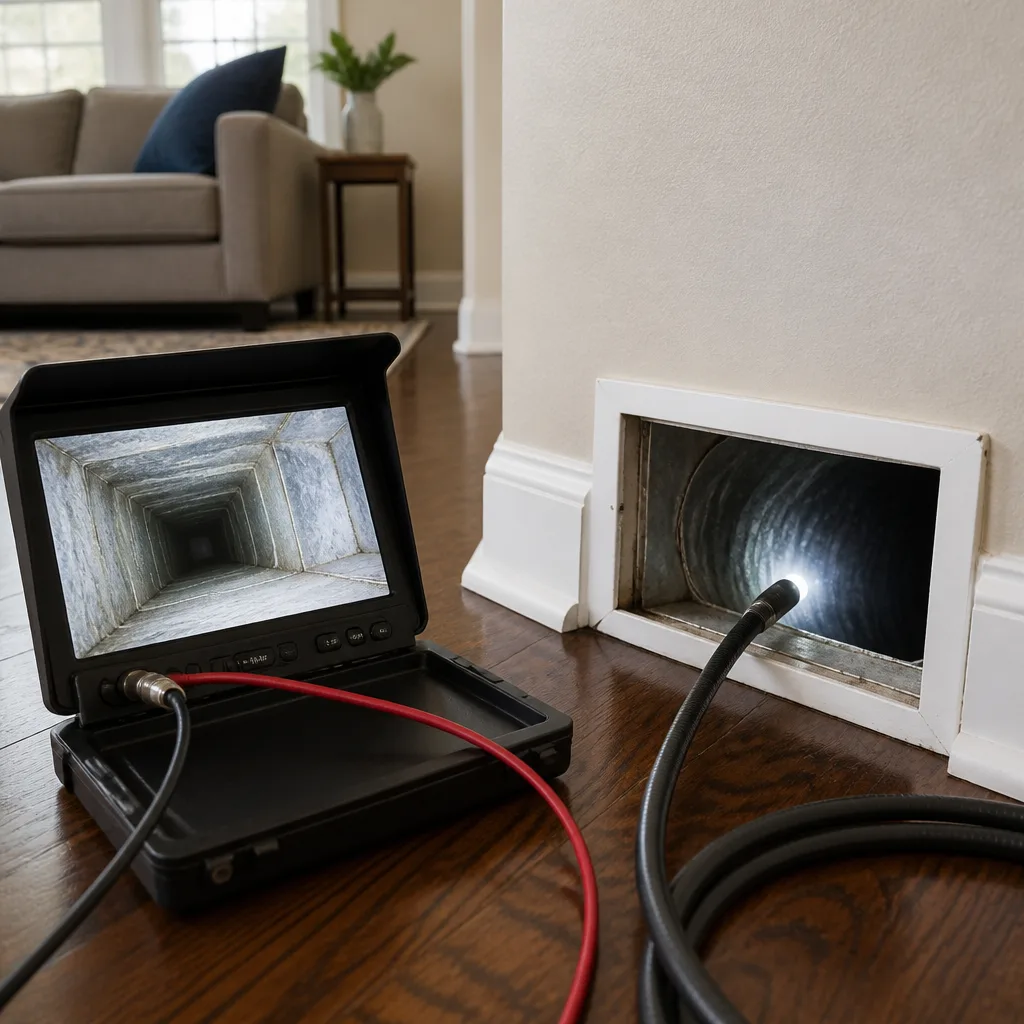 Camera inspection
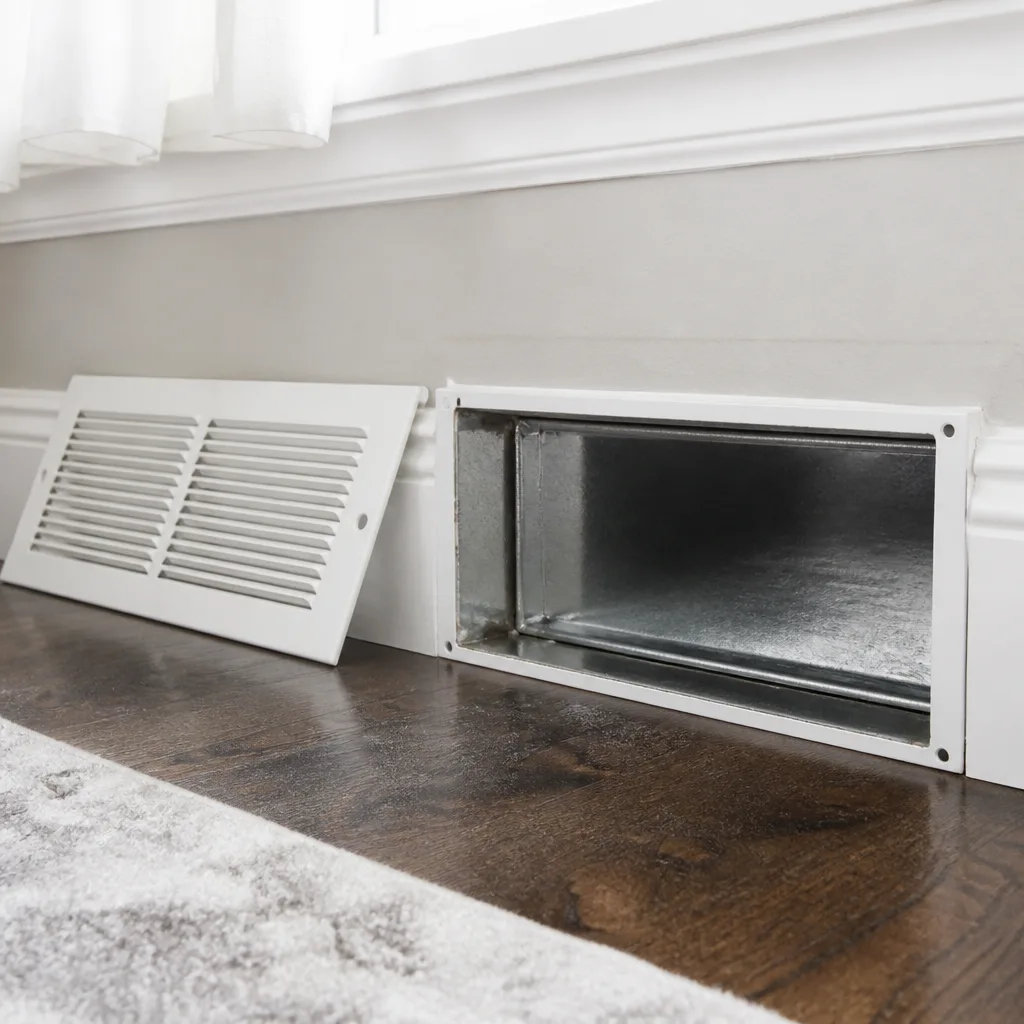 Sanitizing & deodorizing
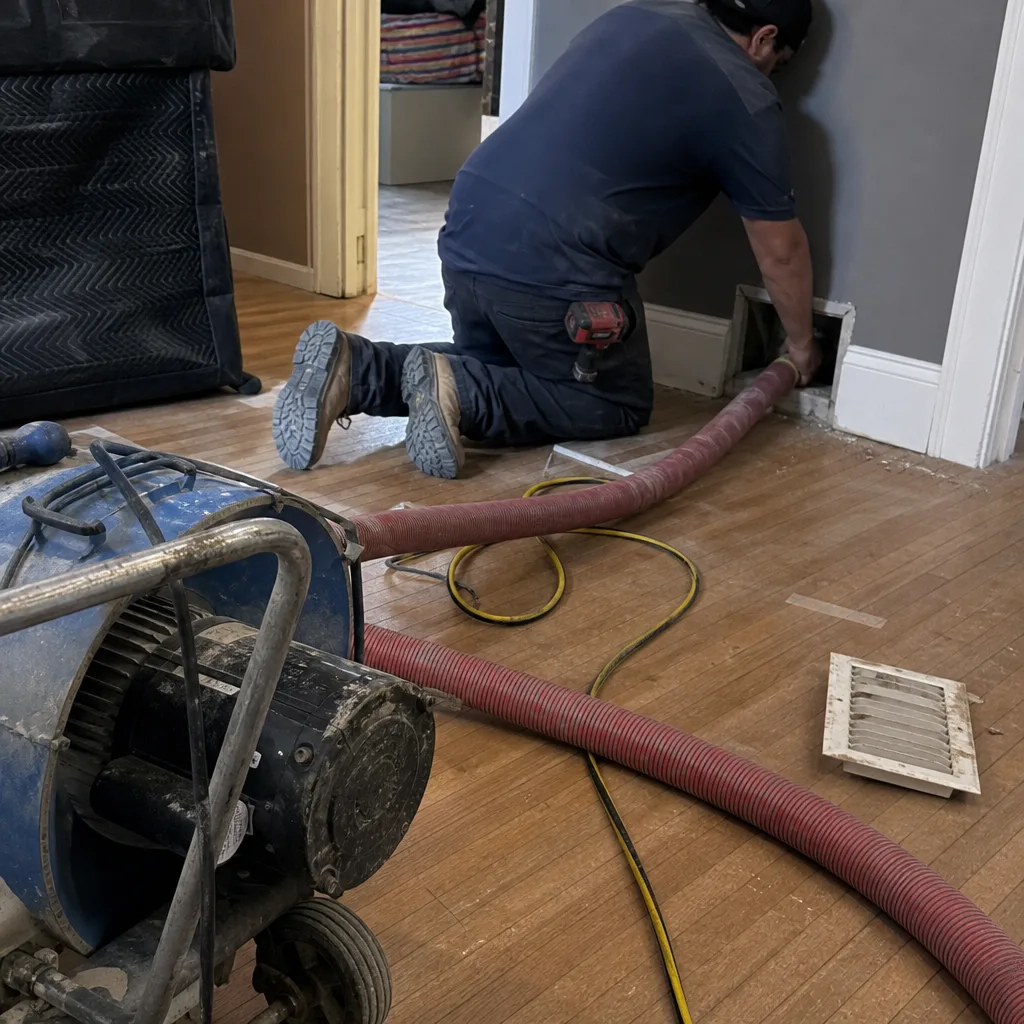
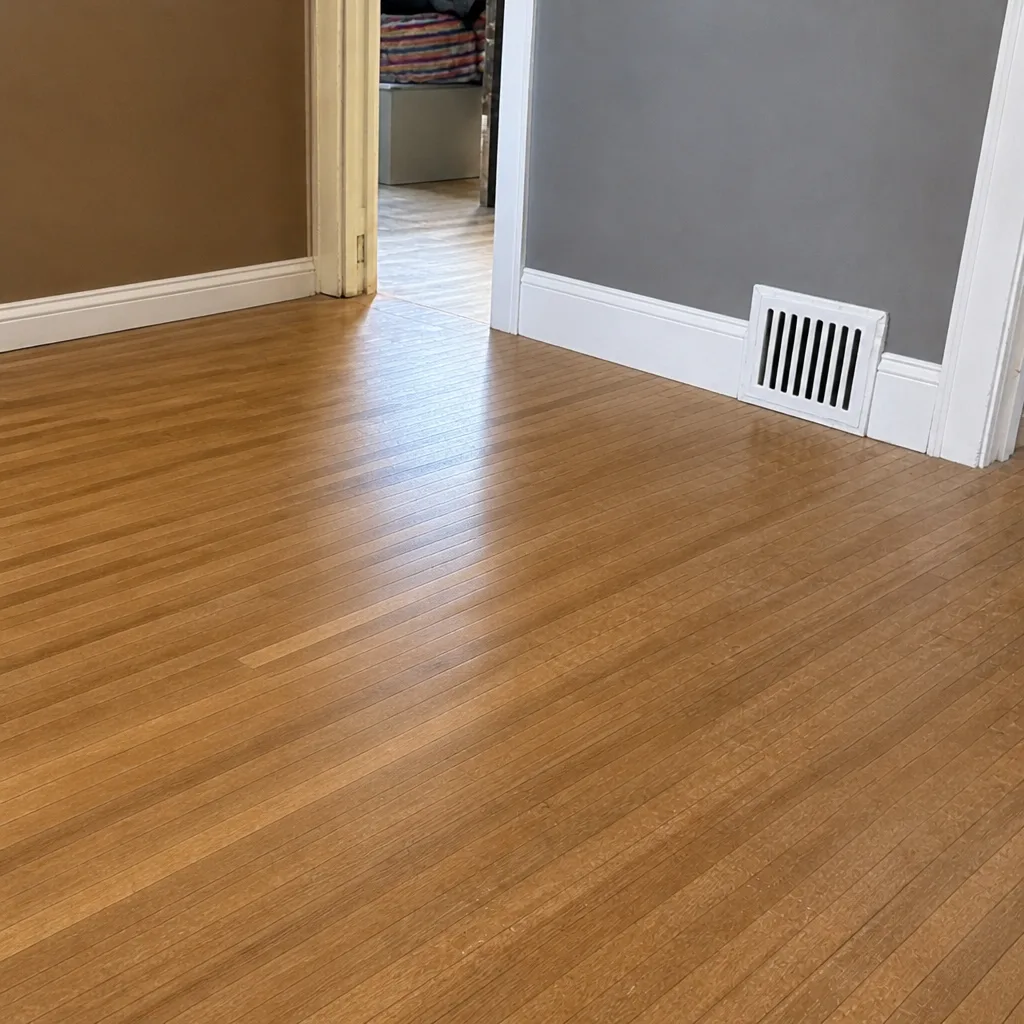
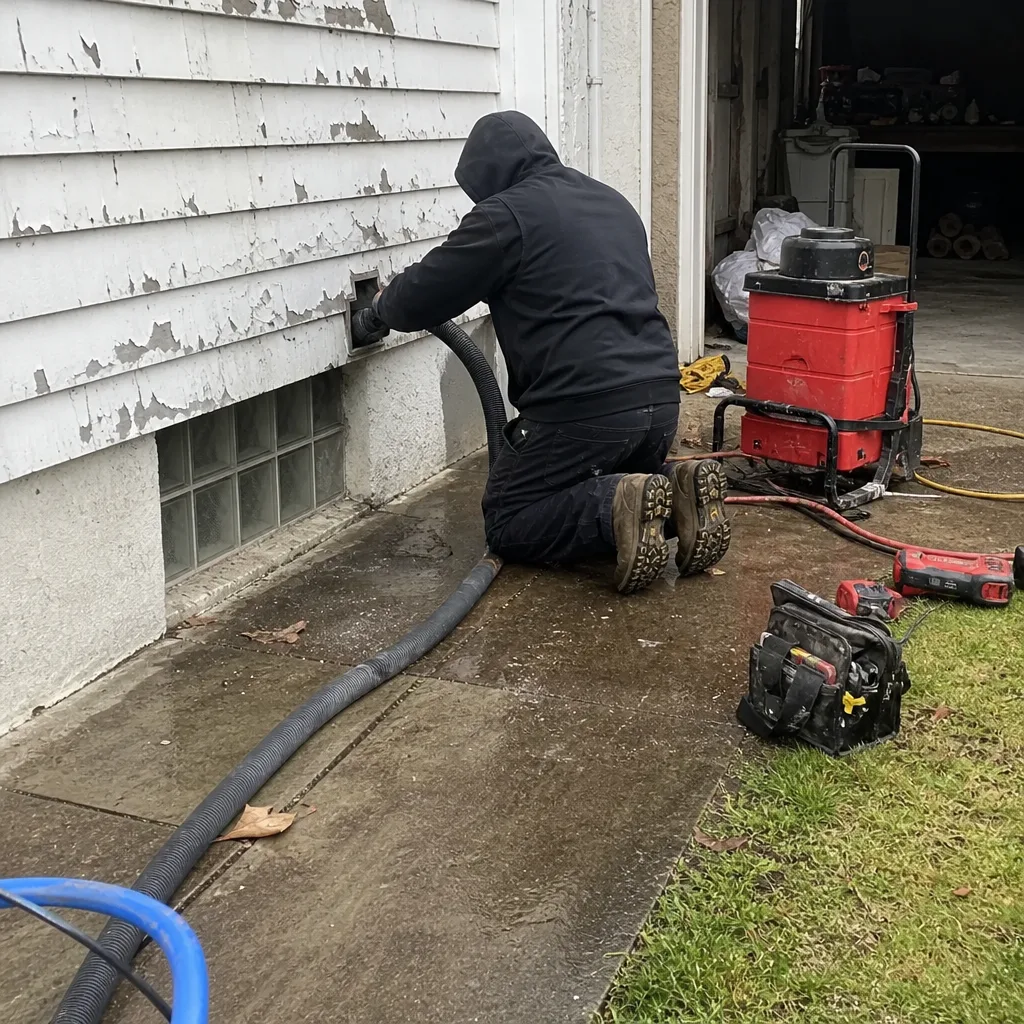
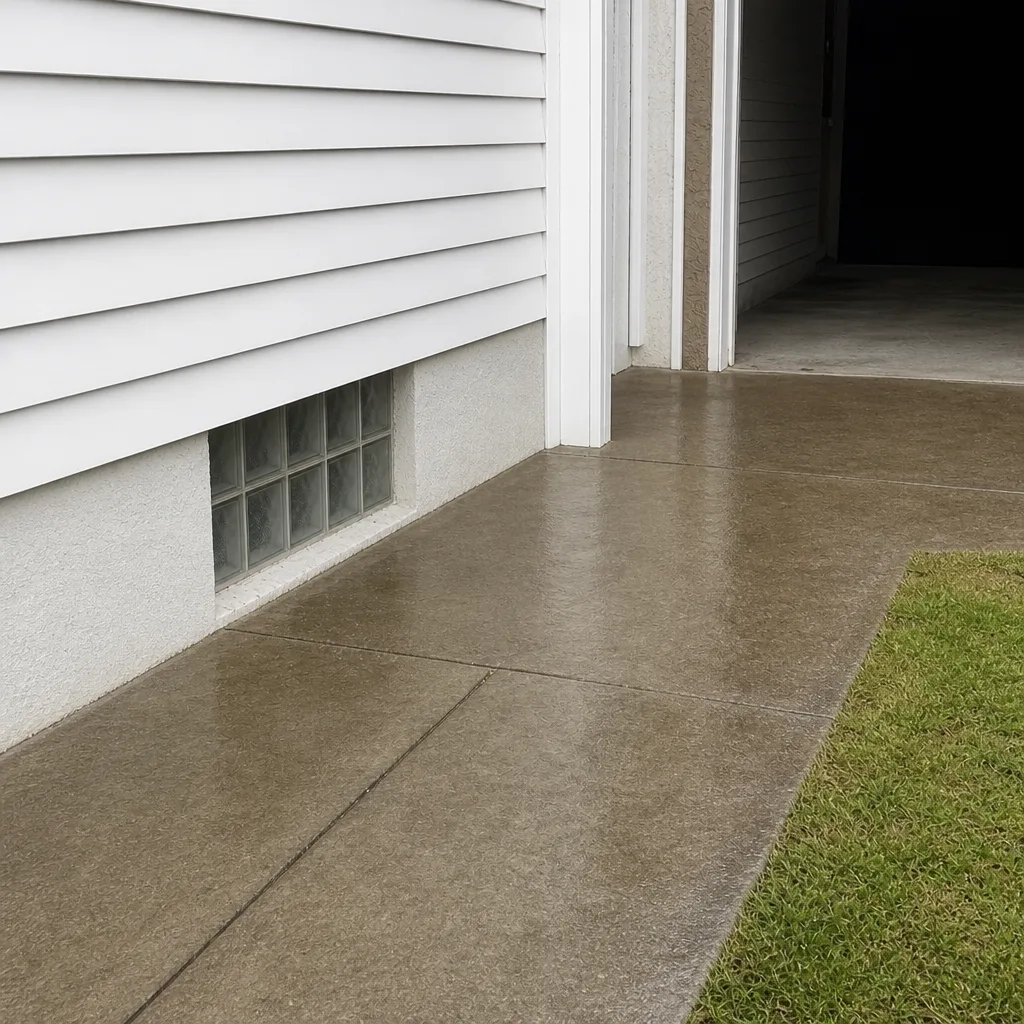
Whole-system duct and dryer vent check with before-and-after photos - you see exactly what came out of your vents
That "$99 whole-house special" is a bait ad - the real number appears once they are in your hallway, or the "clean" is a shop-vac at the register. We photograph the inside of your ducts before and after instead.
Air Duct Cleaning Cost Breakdown: The North Buffalo Homeowner’s Reference for 2026
Two North Buffalo homeowners with identical square footage can receive quotes that differ by $400. Neither quote has to be dishonest for that to happen. The gap usually comes down to what’s actually itemized: system size, how many access points have to be cut, whether sanitizing is included, and whether the equipment on the truck is real negative-air machinery or a shop vacuum with a long hose. This guide breaks down what drives cost in North Buffalo’s housing stock, which pricing model actually serves you, and the one thing that should never add money to a job mid-visit. By the end you’ll be able to read a duct cleaning quote the way a contractor does.
Quick Answer
Air duct cleaning in North Buffalo typically runs $350 to $700 for a standard whole-home system, with larger or multi-zone systems in the $700 to $1,100 range. Add-on services like sanitizing, dryer vent cleaning, or duct repair push the total higher, and the written estimate – not a coupon – sets the final price. The number on the bottom line matters less than what’s itemized behind it.
Styles & brands we work with
- Whole-home duct cleaning
- Dryer vent cleaning
- Camera inspection
- Sanitizing & deodorizing
Table of Contents
- Per-Vent vs. Per-System Pricing: Which Model Actually Favors You?
- What Legitimately Adds Cost to a Duct Cleaning Job
- How North Buffalo’s Housing Stock Changes the Math
- What Should Never Add Cost Mid-Job
- A Sample Line-Item Quote vs. a Flat-Rate Quote
- Equipment Tier: The Line You Can’t See on Paper
- Dryer Vents, HVAC Coils, and Sealing: Related Costs Worth Knowing
- How to Read a Quote in Five Steps
Per-Vent vs. Per-System Pricing: Which Model Actually Favors You?
The first fork in the road is the pricing model itself. A per-vent quote charges by the number of supply and return registers in the home. A per-system quote charges for the whole system as one job, regardless of how many registers it feeds. They’re not interchangeable, and one of them quietly punishes you for how your house was built.
Here’s the practical difference:
- Per-vent pricing tends to work against larger homes with many registers. A 1920s North Buffalo two-flat with 18 registers gets charged for 18, even though it’s a single mechanical system. It also rewards the contractor for counting rather than cleaning.
- Per-system pricing charges one flat figure for the whole duct network. It’s predictable, it doesn’t creep if the tech finds an extra branch line, and it’s the model you can compare across quotes without a calculator.
For most North Buffalo homes – which tend to be well under 2,500 square feet with a single furnace and a handful of branch runs – per-system pricing is the cleaner deal. It removes the incentive to pad register counts and keeps the conversation on what’s actually inside the ducts rather than how many covers are on the floor. If you’re in a larger multi-zone home, ask how zones are counted before you sign.
One thing to watch: a very low per-vent figure (the kind that shows up on a coupon) often means the price climbs once the technician is inside and “discovers” more registers than quoted. Ask up front, in writing, how many registers the estimate covers and what happens if there are more.
What Legitimately Adds Cost to a Duct Cleaning Job
Some of the spread between quotes is real. These are the legitimate cost drivers, and a transparent quote names each one:
- System size. More ductwork means more time and more negative-air capacity to maintain containment. A single-return system is faster than one with multiple returns and long trunk runs.
- Duct material type. Sheet metal is straightforward. Flexible ducting and older rigid fiberglass duct board require gentler mechanical agitation so the lining isn’t damaged – that’s slower work, and the equipment has to match.
- Access point cutting. If your system has no service openings, access ports may need to be cut at the plenum or trunk. A quality outfit seals these properly afterward; a cheap one leaves holes in your ductwork.
- Sanitizing treatments. Fogging or surface sanitizing is a separate step from cleaning, and different products and dwell times affect the price. This is where Guardsman-grade surface and sanitizing products come in for an air quality and sanitizing service.
- Repair findings. Loose joints, disconnected runs, or crushed flex sections found during cleaning become a duct repair and sealing quote. That’s an honest escalation because the fix is visible and documented.
What separates an honest add-on from an invented one is documentation. If a tech says a run is crushed, they should be able to show you the photo or the camera feed before you agree to anything. If we find a compromised joint during a cleaning, we photograph it, explain the fix, and price it separately from the cleaning – never bundle it silently into the original number.
How North Buffalo’s Housing Stock Changes the Math
North Buffalo is not a new-build market, and that matters for duct cleaning costs more than square footage does. The neighborhood runs heavily to pre-1960 housing – 1920s and 1930s doubles and singles, plus a band of 1950s and 1980s stock – and each generation of home creates different duct work conditions.
What this means in practice:
- Pre-1960 homes often have original sheet metal trunk-and-branch systems, sometimes with unlined runs and odd transitions added over the decades. These are usually fine to clean but take longer to access, and the joins need attention afterward.
- 1950s builds frequently mix retrofit flex ducting into older trunks, so you get flex runs that need gentle agitation next to rigid metal that can take a full rotary brush.
- 1980s stock tends to be more consistent, which usually means a tighter and more predictable quote.
Basements are near-universal in North Buffalo, which is a cost advantage – the main trunk and plenum are accessible without crawling. Attic runs, where they exist, add time. Long, humid summers and cold winters also mean your system is running hard most of the year, so dust and debris accumulate faster than in a mild climate, which is one reason a cleaning interval in the two-to-five-year range is worth considering in an older North Buffalo home. That’s general guidance, not a rule; a contractor who inspects your system can tell you what yours actually needs.
What Should Never Add Cost Mid-Job
Here’s the sharpest line in this whole guide: a “mold finding” that wasn’t documented on the initial inspection should never trigger an upsell before the technician can show you the evidence. That single pattern is the most common source of the bait-and-switch reputation this trade has earned in North Buffalo and everywhere else.
Mold is real and it does happen in ductwork, particularly in humid summer conditions where condensation forms. But mold cannot be diagnosed by a technician who peers into a register and declares it. It requires a physical sample analyzed by a lab, or at minimum a camera image you can look at yourself. If someone tells you there’s mold the moment they’re inside and offers to remediate it for an additional fee, that’s your cue to stop.
Other things that should not add to a quoted price mid-visit:
- A “discovered” register count that wasn’t in the original estimate (the quote should state the register count up front).
- An unannounced sanitizing add-on that appears on the invoice.
- A fee for access ports that the initial walk-through already covered.
- A higher number simply because the job “took longer than expected.” Per-system pricing fixes this – the price is the price.
If you’re shopping in North Buffalo and a quote includes a mold remediation line item, ask for the lab report or a sample image. A legitimate environmental finding comes with documentation.
A Sample Line-Item Quote vs. a Flat-Rate Quote
The clearest way to see what you’re paying for is to compare two quoting styles side by side. Below is an illustrative breakdown of what a transparent itemized quote looks like next to a flat-rate quote that obscures scope. The ranges are typical North Buffalo estimates only – the written estimate you receive sets the actual price.
- Duct cleaning, whole system (main + branches, negative air containment): $350 to $550
- Additional zones or second return trunk: +$100 to $200
- Sanitizing / air quality treatment: $150 to $300
- Dryer vent cleaning (standalone service): $100 to $200
- Duct repair & sealing (per compromised run): $150 to $400
- Access port cutting and sealing (if required): +$75 to $150
An itemized quote lists each line with a scope and a number. A flat-rate quote says “$299, whole house” and then leaves you guessing what happens when the job takes longer, when there are more registers than advertised, or when a broken joint turns up. The flat-rate model isn’t automatically wrong – it can be a fair deal – but only if the scope is spelled out in writing. The problem is the flat rate that turns into a phone call mid-job saying the price has changed.
We operate on one flat price per system, agreed before any work starts. No per-vent pricing, no surprise add-ons. If the scope genuinely changes because of something we discover, we photograph it and re-quote the difference with you before continuing. You leave with before-and-after photos of your own ducts, so you can see the work that was done.
Equipment Tier: The Line You Can’t See on Paper
The single biggest factor that doesn’t show up on most quotes is the equipment. This is where the difference between a real duct cleaning and an expensive vacuum job lives, and it’s the reason two quotes for the same square footage can be far apart without either being dishonest.
Professional cleaning requires two things working together: mechanical agitation to break debris off the duct walls, and sustained negative-air pressure to capture it rather than blow it into your living room. The rotary brush is what does the agitation – it’s the standard method because suction alone won’t dislodge caked-on dust from the duct surface. Negative-air containment is what keeps the dislodged debris from going anywhere but into a filter.
That’s why we use Rotobrush rotary brush systems for the wall agitation and Nikro negative-air machines to contain the debris during the job. The filtration stage uses Abatement Technologies equipment – the same category of air control used in environmental remediation work – because capturing contaminants matters as much as loosening them. A shop vacuum with a long hose can’t do this; it releases fine particulate back into the air it’s supposed to be cleaning.
When you compare quotes, ask directly what equipment will be used. If the answer is a brand name and a machine model, you’re comparing real services. If it’s “a high-powered vacuum” with no specifics, that’s the gap. Duct repair and sealing, air sanitizing with Guardsman-grade products, and integrated air quality hardware from Honeywell and Aprilaire all run on the same serious-equipment logic – the right tool for the specific job, not a single do-it-all device. For the full scope of what professional air duct cleaning covers, the equipment list is where the price difference shows up.
Dryer Vents, HVAC Coils, and Sealing: Related Costs Worth Knowing
Most homeowners arrive for duct cleaning and end up asking about related services, so here’s how they fit into the cost picture. HVAC cleaning – the blower, coil, and cabinet – is often bundled with duct cleaning because the components share an air path. Cleaning the ducts around a dirty coil leaves half the job done.
Dryer vent cleaning is a separate service with its own safety case. Lint accumulation in dryer exhaust is a documented fire risk, and a clogged vent also makes the dryer run hotter and longer, wearing it out faster. A dryer vent is usually a shorter, simpler job than the full HVAC system, so the price is lower – typically $100 to $200 in North Buffalo – but the risk it addresses is real and worth treating seriously. Many homeowners book it alongside duct cleaning once they’re already having the work done.
Duct repair and sealing is where quotes can shift most. A joint that’s separated, a crushed flex run, or a boot that’s pulled away from the register all leak conditioned air into a basement or crawl space and pull unfiltered air into the system. Sealing those runs costs more than cleaning alone but solves a problem cleaning can’t touch. We seal what we clean specifically because a clean duct system with a broken joint is still a leaky one.
Air quality and sanitizing rounds it out – the fogging and surface treatment step plus the option of whole-home filtration hardware. Honeywell and Aprilaire both make products in that space, and if a homeowner wants to address the source of dust or allergens rather than just clean up the existing buildup, having a specialist who integrates those products means one converson, one visit, one vendor.
How to Read a Quote in Five Steps
Here’s a numbered process for evaluating any duct cleaning quote you receive in North Buffalo:
- Find the pricing model. Is it per-vent or per-system? If it’s per-vent, ask how many registers are counted and what happens if there are more. If it’s per-system, confirm the whole network is covered.
- Check the scope line. What’s actually included: main trunk only, all branches, returns, plenum? A vague “whole house” needs to become a specific list of components.
- Identify the add-ons separately. Sanitizing, access ports, repair findings, and dryer vent should each appear as their own line with their own price. Not one bundled number.
- Ask for the equipment. Rotary brush brand, negative-air machine, and filtration. If the answer is a vacuum description, that’s a flag.
- Confirm documentation. Before-and-after photos of your ducts, and written findings for anything that turns up mid-job. If the contractor won’t provide photos of the work, ask why.
Five minutes with this checklist will tell you more than an hour of comparing bottom lines. The name-brand equipment, the itemized scope, and the photo documentation are the three signals that separate a professional job from a coupon. To see how a professional-grade operation runs from start to finish, the team at Air Duct Cleaning North Buffalo brings the full equipment set to every job.
Common Mistakes to Avoid
- Choosing on price alone. A $99 duct cleaning and a $550 whole-system cleaning are not the same product, and the $99 version usually becomes a $400 surprise once the tech is on site. Compare scope, not headlines.
- Accepting an undocumented mold finding. In North Buffalo’s older housing stock, mold does happen – but it requires a lab sample or a camera image you can see, not a verbal verdict from the person selling the fix. Ask for documentation and walk away if there isn’t any.
- Paying per-vent for a larger home. If you have a 1920s North Buffalo two-flat with 18 registers and one furnace, per-vent pricing charges you more for the same mechanical system. Ask for per-system pricing before you sign.
- Skipping the access port question. A cheap quote that doesn’t include properly sealed access ports leaves holes in your ductwork. Ask how access is cut and how it’s sealed afterward, and confirm it’s in the estimate.
- Ignoring the dryer vent. It’s a legitimate fire safety item, not an upsell add-on, and a clogged vent also shortens the dryer’s life. Have it checked if you haven’t had it cleaned – it’s a shorter, cheaper job than the main system.
- Not asking for before-and-after photos. You can’t see inside your ducts. Photo documentation is the only proof you have that the work happened – ask for it up front, not afterward.
- Confusing a consumer vacuum with professional equipment. A shop-vac with a hose moves dust around. Rotary brush agitation plus negative-air containment captures it. The equipment tier is the invisible line item that separates the two.
See the difference
 Before
 After
 Before
 After
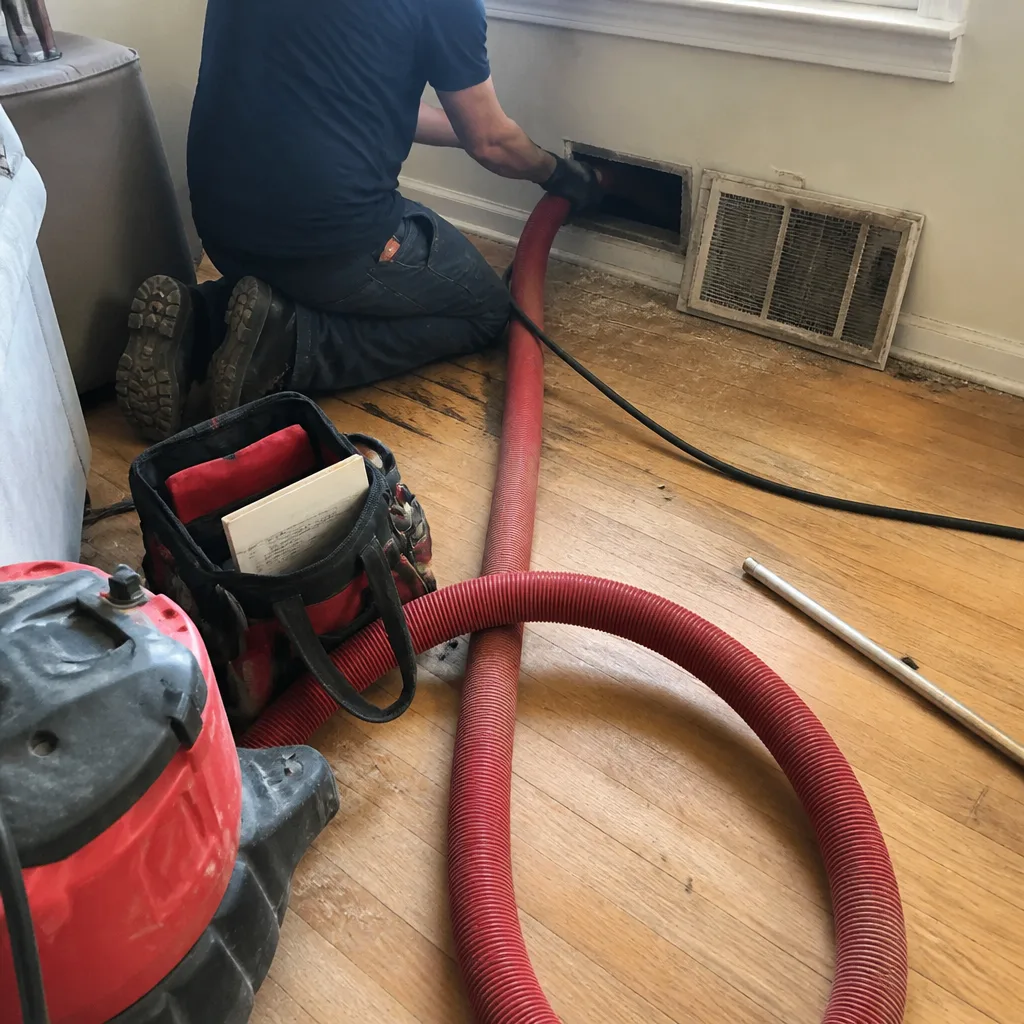 Before
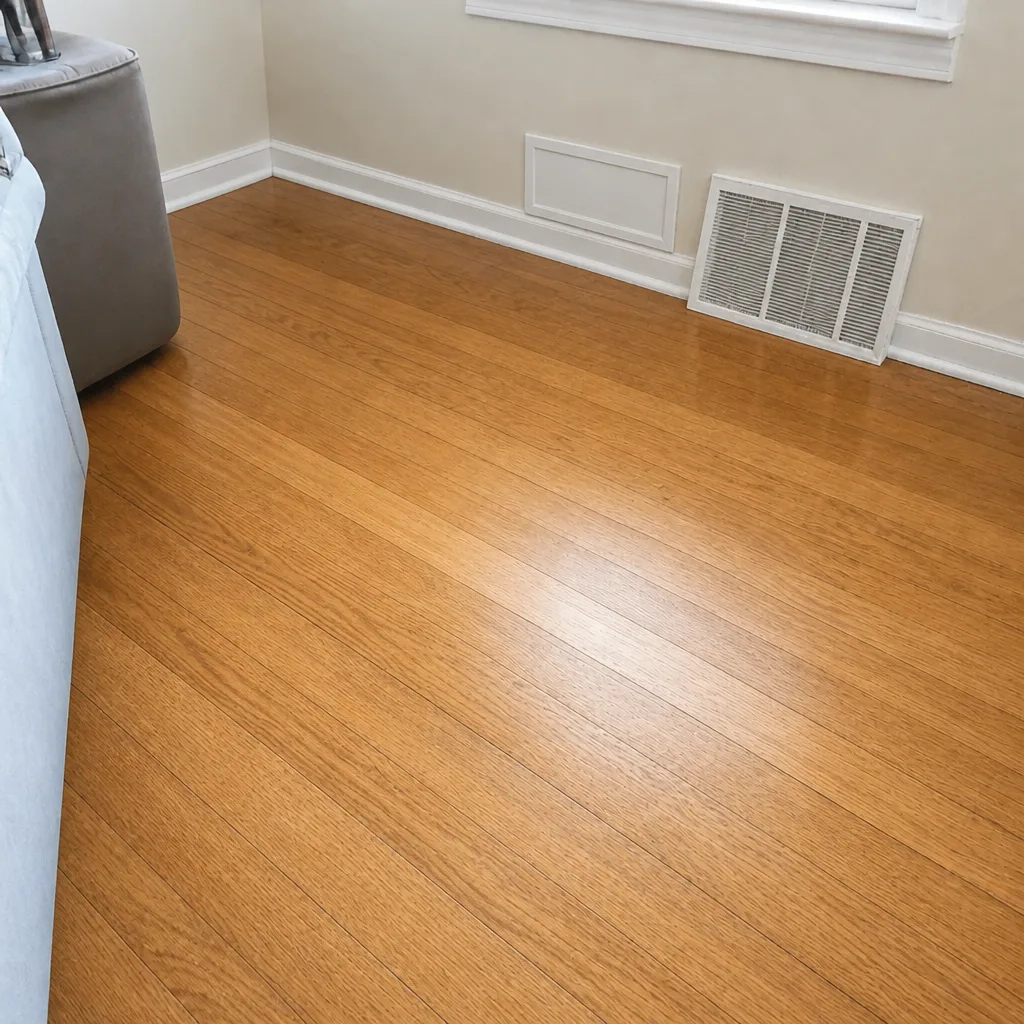 After
When to Call a Professional
You don’t need a duct cleaning on a fixed schedule – most homes can go a couple of years between cleanings, sometimes longer. What warrants a call is a change. Visible dust puffing from a register when the system kicks on, a musty smell that lingers after cleaning the rest of the house, allergy symptoms that spike when the heat or AC runs, or a recent renovation that produced a lot of drywall dust – these are reasons to have someone look. Age is the other factor: if you’re in a pre-1960 North Buffalo home and can’t remember the last cleaning, it’s worth an inspection. Dryer vents get more urgency than ducts because the fire risk is real. And any time a quote comes in that feels off – a promise that doesn’t match the equipment, a price that climbs mid-job – a second opinion is free. Air Duct Cleaning North Buffalo offers free estimates in North Buffalo – call (877) 379-9769.
Frequently Asked Questions
Air duct cleaning in North Buffalo typically runs $350 to $700 for a standard whole-home system, and $700 to $1,100 for larger or multi-zone homes. Add-ons like sanitizing, dryer vent cleaning, or duct repair push the total higher. Call (877) 379-9769 for an exact quote – estimates are free.
The cheapest quotes are usually priced per-vent or flat-rate without a stated scope, which means the low number is a starting point, not a full price. A quote that’s $150 cheaper often excludes access ports, uses consumer-grade equipment, or turns into a much larger invoice once the tech is inside. Real pricing reflects the equipment tier – rotary brush agitation plus negative-air containment – and the scope. Call (877) 379-9769 for an honest estimate.
The only reliable proof is before-and-after photos of your own ducts, taken on site during the job. Ask for them up front as a condition of hiring, not as a favor afterward. We provide before-and-after photos as a standard part of the service. Call (877) 379-9769 if you’d like to see how that documentation works.
Most North Buffalo homes don’t need a fixed-interval schedule – a cleaning every two to five years is a reasonable general guide for older homes running their system hard through long summers and cold winters. Clean sooner if you’ve had a renovation, notice dust from registers, or smell mustiness. Call (877) 379-9769 to discuss what your specific system actually needs.
Sometimes, yes. Pre-1960 homes often have original sheet metal systems with transitions added over the decades, and older rigid fiberglass or flex duct takes slower, gentler agitation. That can add time and cost compared to a 1980s build. The upside is that near-universal basement access makes the main trunk easy to reach. Call (877) 379-9769 for a quote specific to your home.
Yes – dryer vent cleaning is a standalone service we handle alongside core air duct and HVAC cleaning work, so most North Buffalo homeowners combine them on one visit. Dryer vent cleaning typically runs $100 to $200 on its own. Call (877) 379-9769 to schedule a combined estimate.
The Bottom Line
The number on a duct cleaning quote is not the thing to compare – the itemization behind it is. Per-system pricing usually favors North Buffalo homeowners over per-vent, especially in larger older homes. Legitimate add-ons (system size, duct material, access ports, sanitizing, repair findings) have a documented reason; things that show up mid-job with no photo or lab report behind them don’t. Equipment tier is the invisible line that separates professional cleaning from a vacuum job, and before-and-after photos are the only proof the work happened. Read the scope, ask about the equipment, and insist on documentation. The quote that answers those questions is the one worth paying for.
Ready to see an itemized estimate on your own system? Call (877) 379-9769 for a free estimate. We answer 24/7. Fast dispatch from 7am to 7pm, Sunday through Friday. One flat price per system, agreed before work starts, and before and after photos of your own ducts when we’re done.
Written by the team at Air Duct Cleaning North Buffalo.